Erosion – a country is moving Westerly
The northern part of Jutland is at the mercy of the eroding forces from both wind and seas. The lanscape has changed radically the pas few hundred years – and continues to do so, as these pictures will show you. There isn’t much resistance in compacted sand…
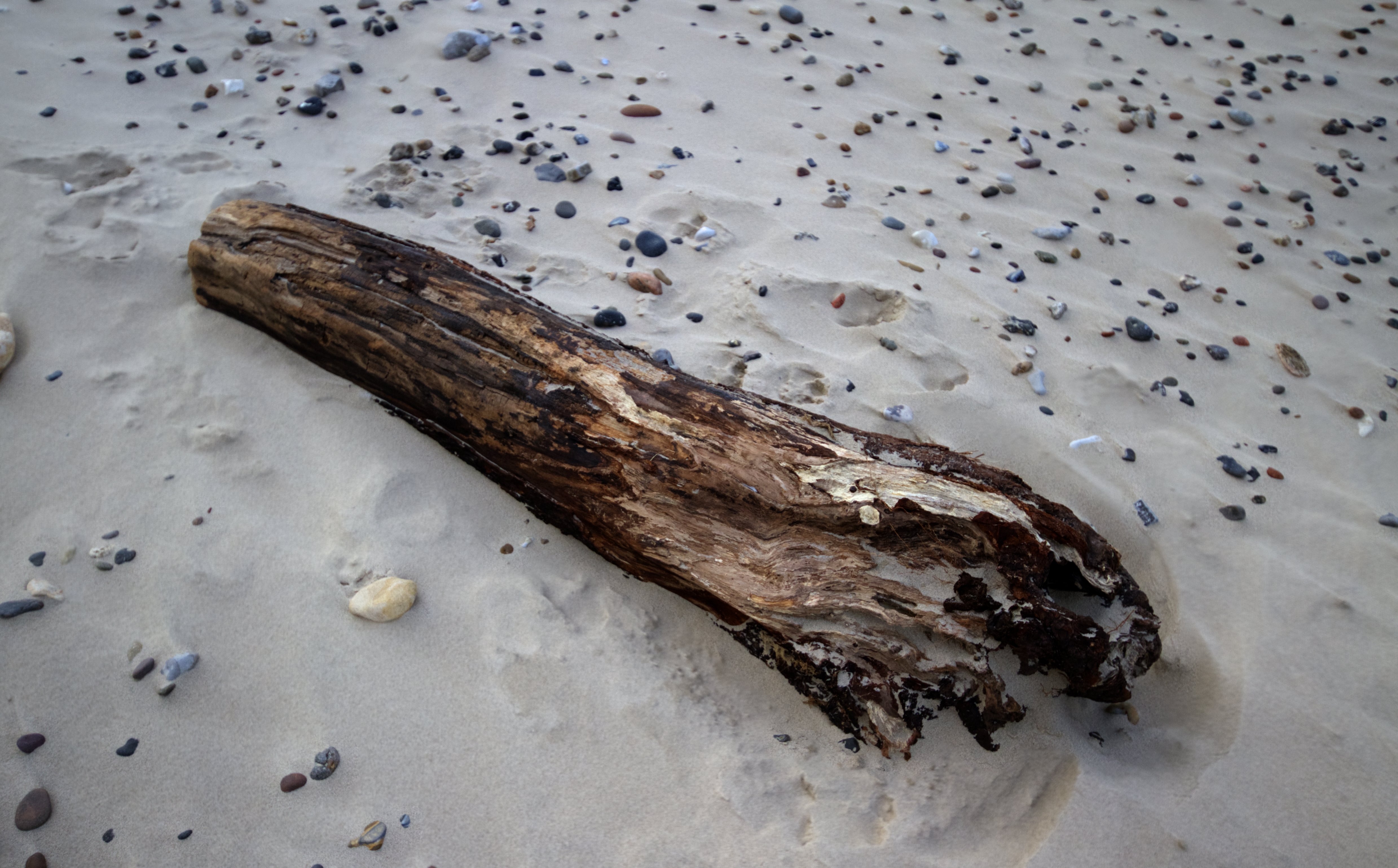
A piece of driftwood worn and torn by the relentless tumbling of the North Sea and the sand - HDR-photo

Eroding sandbanks by the sea

A piece of ancient peat (rich in carbon) revealed as the sand around it erodes

Frontside and backside of erosion - grass klinging on to the moving sand
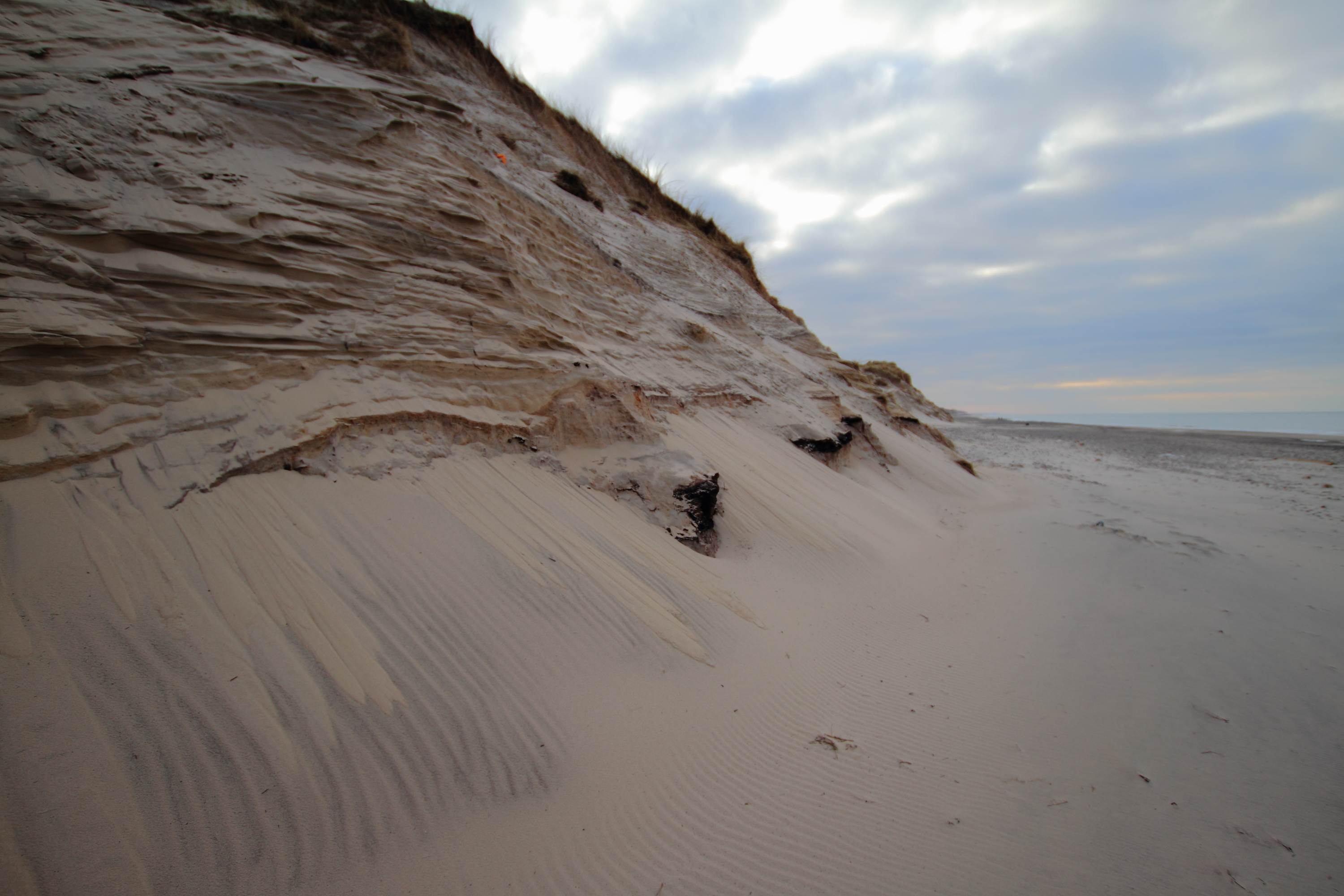
Not much resistance in these sand barrs against the wrath of the Northern Sea
It’s like the Gobi Dessert – only a bit smaller
In the otherwise green northern parts of Denmark, sand is moving right across the country in the general direction of the wind from West to East. This flying sand is moving like a dessert, although the sand is quite moist. The moving sand has throughout history buried houses, farms, roads and churches and only after many years when the sand has passed the area, these abandoned farming community appears on the back side of this moving dessert. However, the sand erodes the fertile top soil and carries it away with the wind leaving barron marshes in it’s wake.
I shot this photo in a particular area called Raabjerg Mile (Råbjerg Mile).

Raabjerg Mile - Tuesday February 7. The lake in front is frosen.
The lighthouses of Skagen
On the very Northern tip of Denmark there are three distinct lighthouses – Grå Fyr (The Grey Lighthouse, still active) – Hvide Fyr (The White Lighthouse) and Vippefyr (The Tilt Beacon) which all signals the importance and necessity throughout history to guide ships safely around this northern point of Jutland.

Grå Fyr

Hvide Fyr
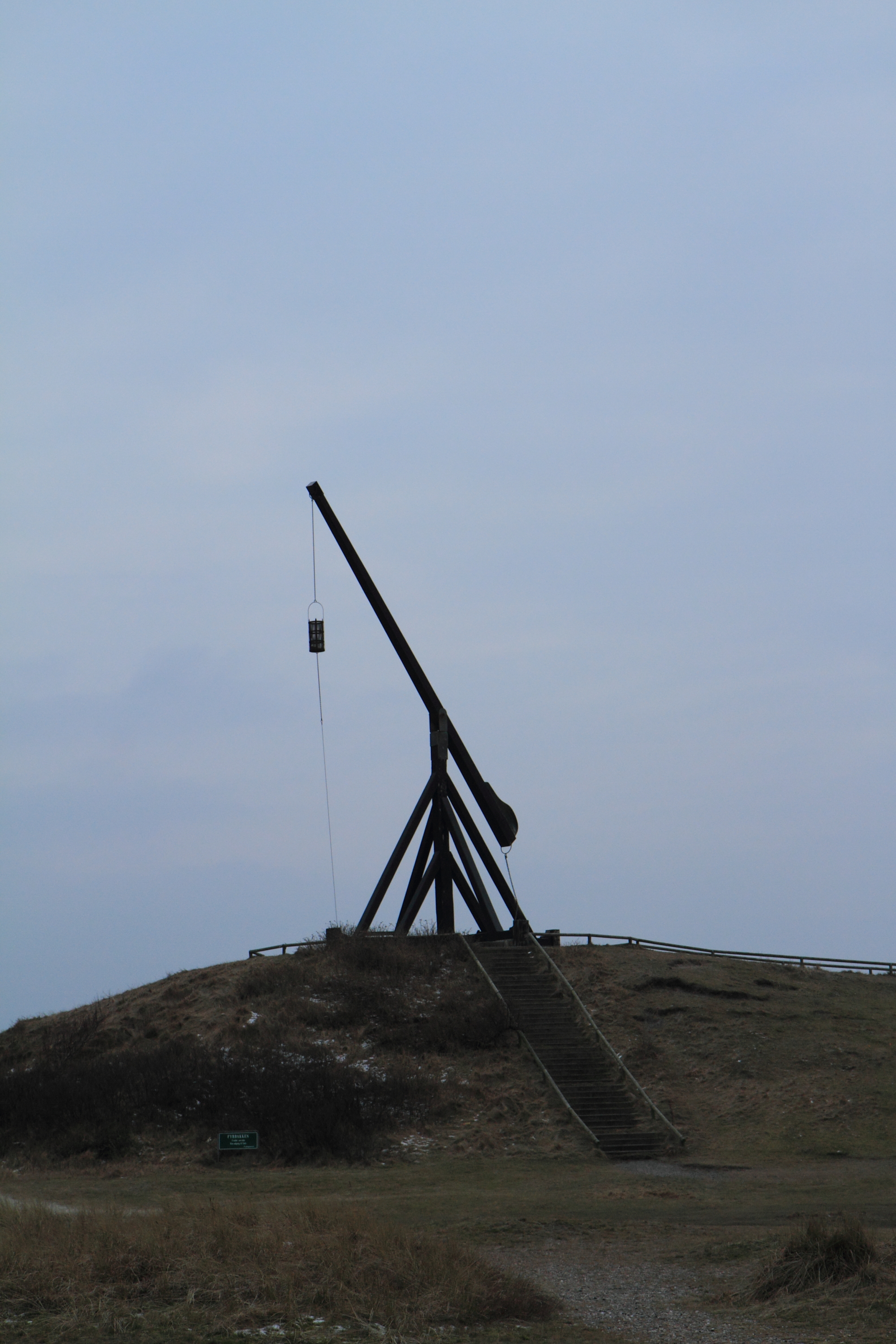
Vippefyr

Vippefyr (The tilt beacon) seen from the base to the tip. It tilts around the central axis which makes it possible to hoist the basked with the burning logs after it's been been lit.
“The Branch” – “The North Cape” of Denmark
I shot a thsi photos on Grenen (translated from Danish: “The Branch”), the very top of Denmark, where the North Sea meets Skagerag. It was bitterly cold with -7 degrees Celsius, moist air and wind so my wool underwear and sweaters was highly apreciated! The coastline is constantly moving and the seas and winds meets – often times – violently. This has been one of the most dangerous places on The Seven Seas, having lead in earlier times to numerous shipwrecks.

The tip of Denmark covered by ice - Next stop Norway
SOPA / PIPA postponed indefinitely
The SOPA and PIPA law proposals are postponed indefinately! Which means the World’s Population – not the Entertainment Industry – still has the democratic control over the internet! (For now)
So in order to join in the free expression of the world this entire blog is free under a CC – Creative Commons License – with the following limitations:
Commercial Use: NO (right back at you, greedy entertainement industry) Not without my written permission.
Share alike/alter the work: Yes, you may alter and share my pictures, videos or texts from this blog, as long as you link back to the blog. But still, if for commercial use, you need my written permission.
This license applies to The Whole World!

Dette verk er lisensieret under en Creative Commons Navngivelse-Ikkekommersiell-DelPåSammeVilkår 3.0 Unported lisens.
I am so sorry…

- Do you prefer a safe Internet?
- Do you prefer a stable Internet?
- Do you prefer the old security of rights “Innocent until proven Guilty” to still be a golden rule in democratic societies?
- Do you support a free, prosperous Internet
- Do you oppose giving control over the World’s most significant tool for Prosperity and Freedom of Expression to the entertainment industry and dictatorius regimes?
Please, watch these film:
http://www.ted.com/talks/lang/en/defend_our_freedom_to_share_or_why_sopa_is_a_bad_idea.html
http://fightforthefuture.org/pipa
This has NOTHING to do with protecting artists’ Copyright! They are already protected through the law over most parts of the world – and I support the ones I like by buying their music and films.
This has EVERYTHING to do with giving the Entertainment Industry (and subsequently corrupt regimes) the TOTAL control over The Internet…
Still not convinced: http://www.youtube.com/watch?v=WJIuYgIvKsc
- If you are a US citizen, please, contact your congressman today and protest!
- Do you know a US citizen, please urge him/her to protest!
On 1/24 it could be too late… The clock is ticking…
Lions Club Narvik/Ankenes – A Bitterly Cold Work for a Sweet Warm Help
In accordance with tradition I purchased the annual Christmas Tree yesterday from the local Lions Club outside the local supermarket REMA 1000 on Ankenes. Lions Club Narvik/Ankenes is a fantastic club! Every year the comb the area for land owners with Christmas Tree sized spuces (Norway Spruce) to sell for Christmas. Once they have found areas suitable for Christmas Trees, they go up (it is usually up a hill side or mountain) into the woods and cut spruces, drag them down to the nearest road and transport them into town.
The spruce I bought yesterday, was a fantastic tree. It smelled just like a spruce is supposed to smell like! And the branches was so thightly packed, it was just amazing! And all the trees for sale looked amazing!
So – what’s the money used for?
Like any other respectable Lions Club, Lions Club Narvik/Ankenes work for free to earn money for humanitarian projects in the local area, nation-wide and internationally.
Today I stopped by with my camera. I would say -9 degrees is pretty cold for a lion, but not these Lions! Their hearts are plenty warm by the important job they are doing to help their fellow human beings (and environment!) to endure the cold winter weather! I took a few shots of the Lions on Ankenes in action.
Do you want to buy the very best looking and smelling Christmas Trees in Narvik? And do you want to help people in need? Here’s the Lions Club sales stand by Rema 1000:
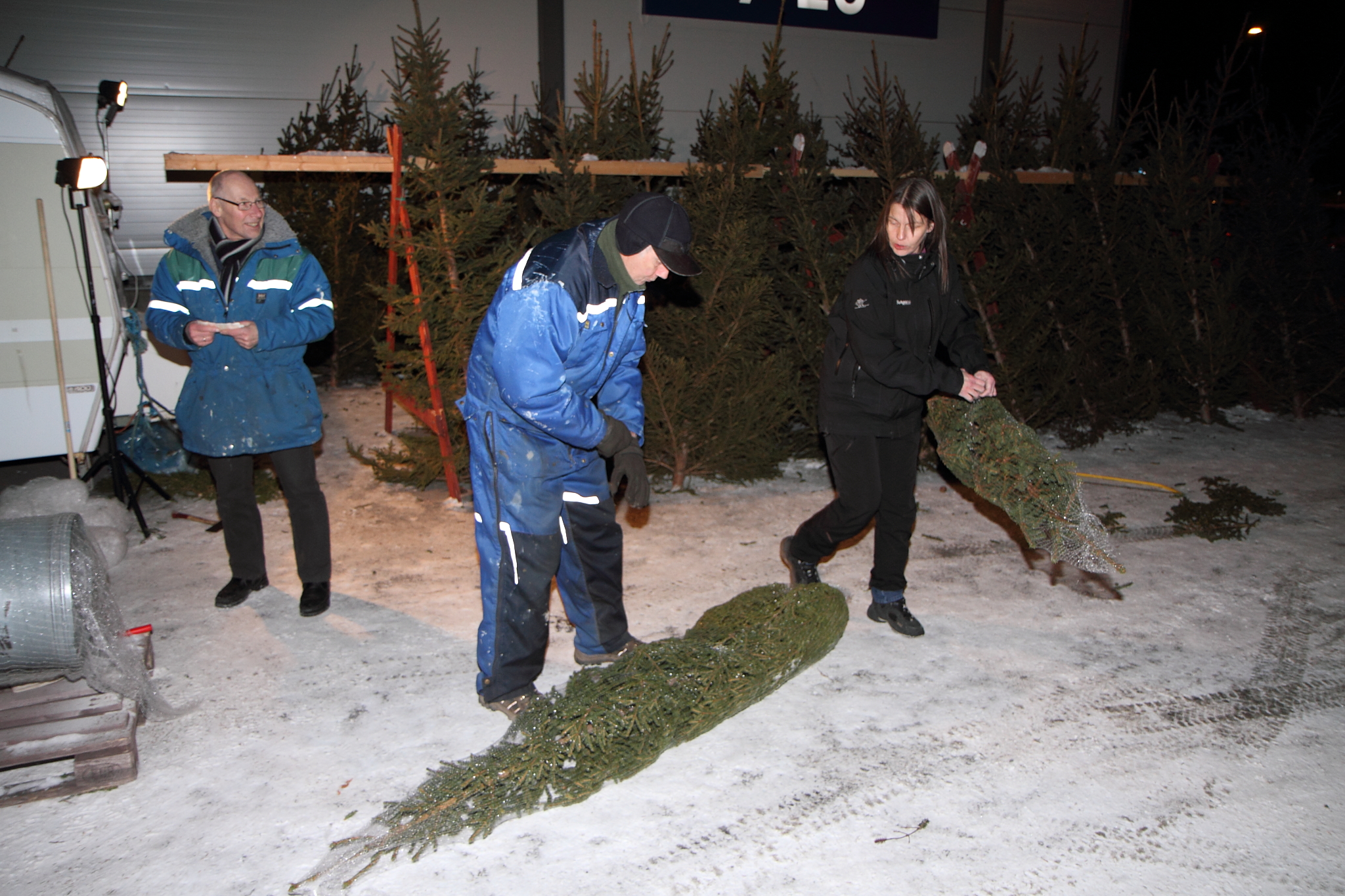
Lions Club Narvik/Ankenes selling Christmas Trees to aid people in need! It's a cold job!

Find your way to the Lions Christmas Tree stand!
1 Year Anniversary – THANK YOU!
Happy 1 Year Anniversary! And THANK YOU for making it fun to write!
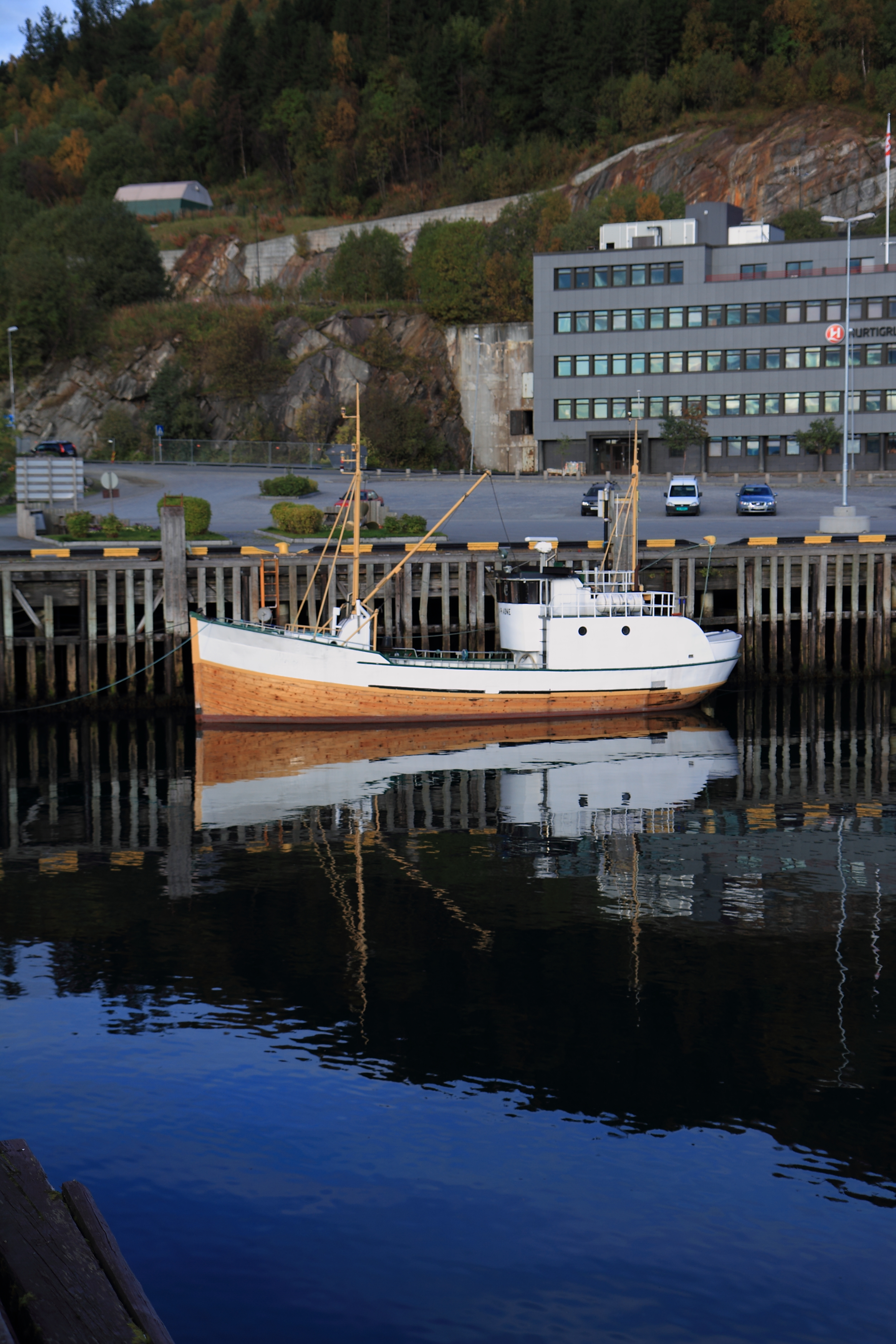
Cutter “Ariadne” – Narvik – Narvik Kystlag
The cutter “Ariadne” this evening in the port of Narvik. “Ariadne” is owned by Narvik Kystlag – an organization for the preservation of traditional vessels in the Ofoten area. Ariadne was taken over in 2005 by Narvik Kystlag from Nordnorsk Fartøyvernsenter og Båtmuseum – an organization for the preservation of traditional North-Norwegian sea-faring culture.
Classic clipper hull – stunningly beautiful lines – although it looks like tha hull has been somewhat rebuilt throughout the years.
The cutter Ariadne
“The Big 5’er” – Havleik (N-5-Bø) and my Grandfather
I guess it’s in my Viking Blood. There are few other places I feel more at home than by and – especially – on the seas! And I know at least one place where the genes ran especially salty in the family – my Grandfather, Rolv Meyer Bjugn. Today I am sailing “just for fun” as 1st Officer on the proud Danish Jagt “Klitta” where I help teaching cub scouts about the joys of The Big Blue.
I just revisited some old pictures of my grandfather and the “modern” fishing vessel – the old N-5-Bø (N-5-Boe, in case the last letter in the registration doesn’t show correctly on your screen) – HAVLEIK. They later on bought a new, bigger wooden hull fishing vessel (63 ft.) and took the same registration number – N-5-Bø and the name Havleik. The “new” Havleik was later sold. She sank after a blazing fire off the coast outside Nesseby in Varangerfjord on the 25th of March 2008 – the entire crew made it in the rafts – but that’s another story. That fire put an end to the 89 year long Havleik era.
The first Havleik
- was built in 1919, with
- a 46 feet clipper hull – width 16.2 feet
- In 1920 she was registered with a Bergsund 28 hp engine. The shipping company owning the ship at that time was registered to Peder Bjugn from Lynghaugen, Bø (Boe) in Vesteraalen.
- In 1936 she was registered with a Norwegian Wichmann 30 hp (the Wichmann was a semi-diesel engine – that is a two-stroke diesel engine).
- Havleik consists of the two Norwegian nouns “hav“, which means sea and “leik” which means “play” (or loosly translated, “joy”). Thanks to Inge M. Johansen – gamlebilderfravesteralen.origo.no – I found these older b/w photos of this classic beauty. Locally she was known as “The Big 5’er” – relating to the registration number N-5-Bø (N for Nordland – the thrid northernmost county – fylke – in Norway).

Havleik – the original vessel in the annual North-Atlantic cod fisheries outside the Lofoten Islands. My grandfather – Rolv – on the fore deck.
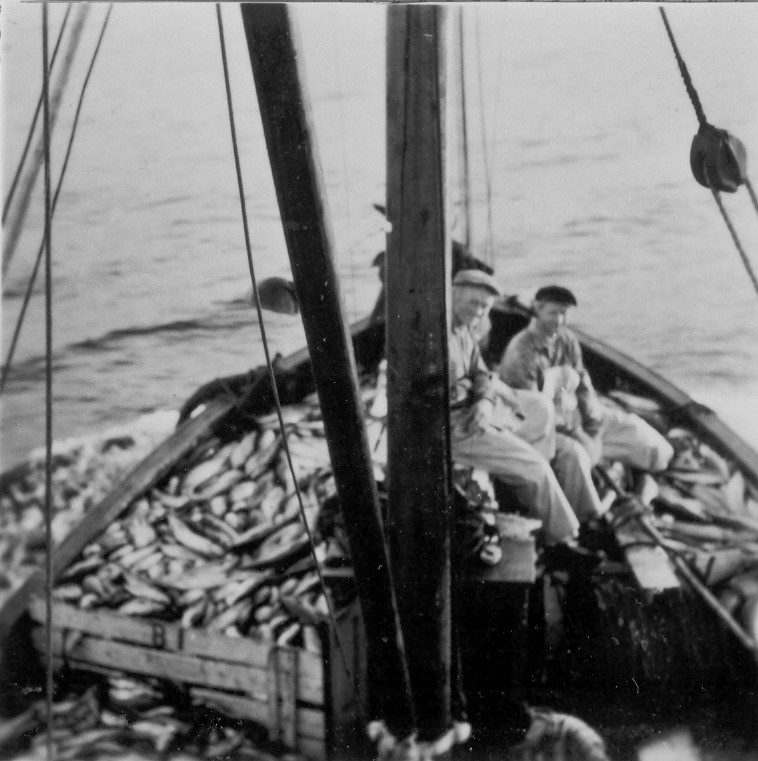
A good catch! 45.000 kilograms of pollock in this load. My grandfather Rolv to the left and Johan Bjugn to the right.

No more freeboard to run on! Loaded to the brink! It was always a question to make a living – not always a question of safety at sea…
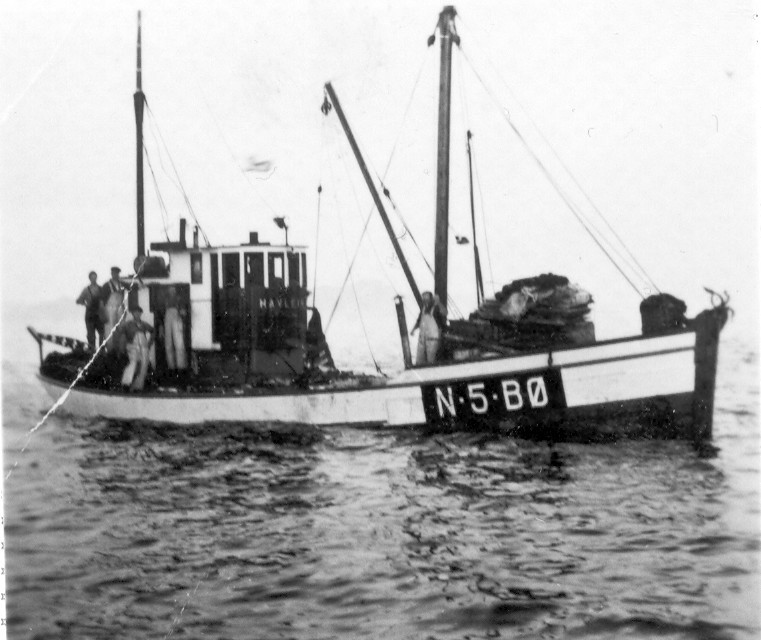
Loaded to the brink. My grandfather Rolv on the aft deck – number two from the left.
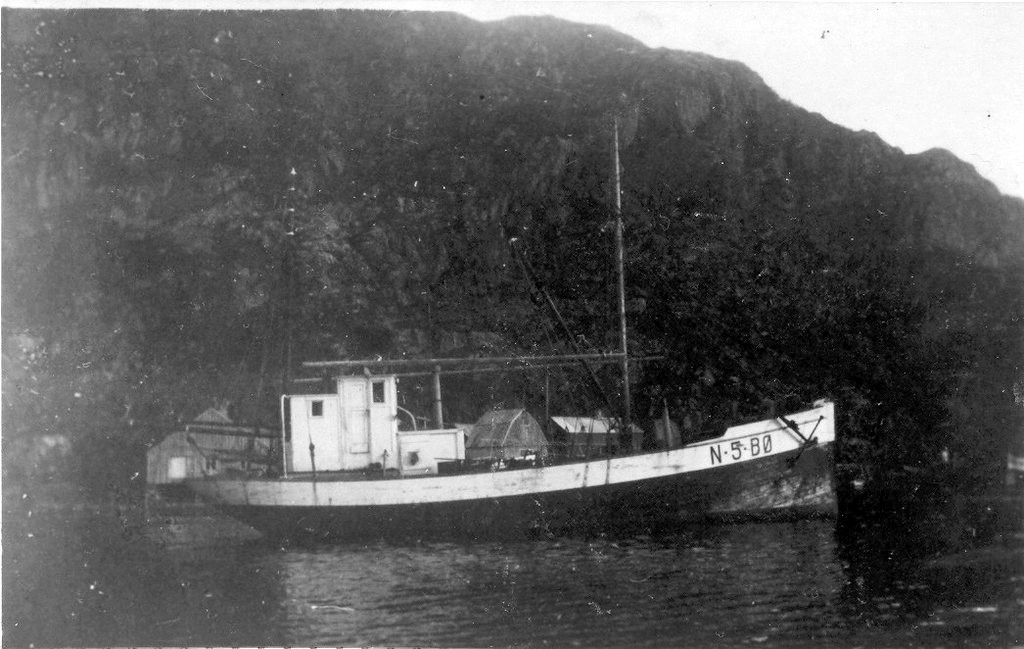
A Classic Beauty – Havleik with her beautiful clipper lines. Slick lines for tackling rough seas.
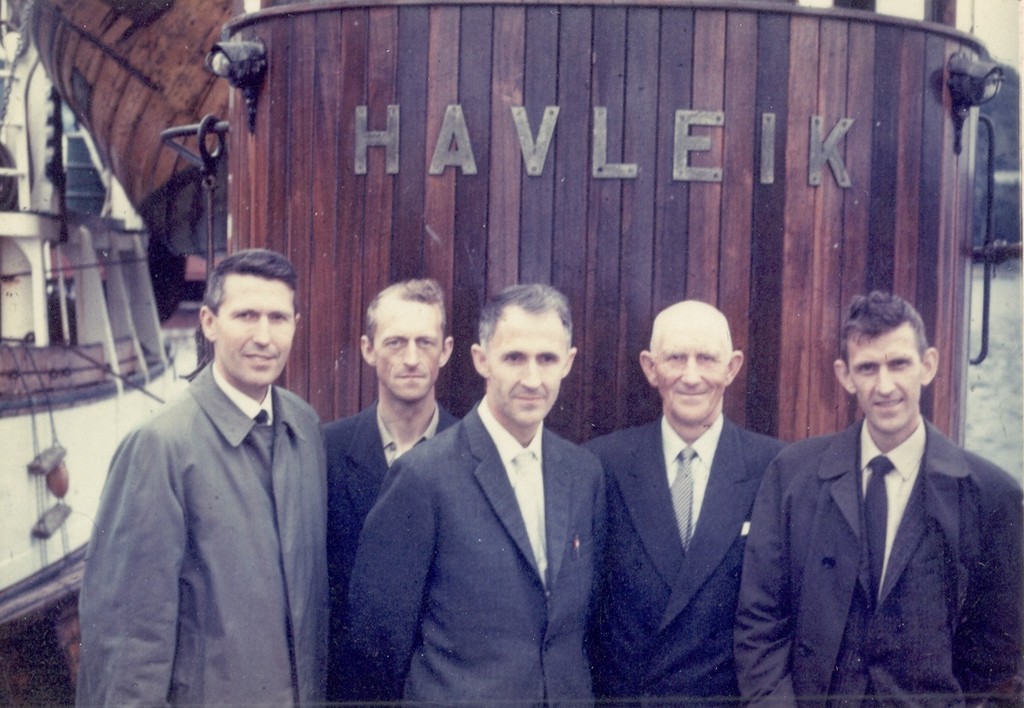
Havleik – a family business. From the left Johannes Bjugn (a highly decorated officer – Lieutenant Colonel – from the first Allied Victory in WW2 – The Battle of Narvik), Leif Bjugn (a fantastically kind man and skillful fisherman), Guttorm Bjugn (former chief of police in Bø in Vesteraalen), Peder Bjugn (fisherman) and Kyrre Bjugn (telephone technician) – all highly respected men.
The End
When the new Havleik was bought – the old one was sold to Kvæfjord outside Harstad. There she laid by an old peer year after year until her hull finally sprung a leak and she sank to the bottom. She was never recovered. An immensely sad way to treat such a gemstone of proud Norwegian culture and a classically beautiful ship.
So what about the fish?
After the fish was landed by the regional fishing vessels and preserved by freeze drying (known as tørrfisk in Norwegian meaning “dried fish” – stockfish), salting and/or – salting and sun drying (known as klippfisk), the produce was loaded onto bigger vessels known as Jekter or Nordlandsjekter. These are quite similar to my vessel – the Danish Yacht Klitta – only bigger. These sailed up and down the perilous Norwegian Coast, primarily to and from Bergen. In Bergen the fish was loaded onto even larger vessels and exported to Europe. Especially Portugal, Spain and Italy has historically been huge importers of Norwegian dried and salted fish.
The North-Atlantic fish (especially the species of cod and herring) is extremely nutritious and the cold, windy climate in the winter was perfect for freeze drying fish. The fish was hung on tall wooden racks and froze while at the same time dried (a process known as sublimation). Freeze dried fish – stockfish – has been known to be edible more than 100 years after being dried…
The other main method of preserving the fish, was salting it and sun drying it on the rocks. One Norwegian word for these rocks – and the same word as the English name “cliff” is “klippe” – hence the name “klippfisk” – “cliff fish” – clipfish.
Of course – fresh fish has been a primary source of nutrition for Norwegians since long before the Viking Period. But preservation has always been necessary for storage in case the weather didn’t allow for fishing. Later on these preserved and highly nutritious “protein bombs” became important sources for proteins in the mediterranean countries like Portugal, Spain and Italy. Later on canned Norwegian fish also became hugely popular in other European countries like Great Brittain.
9/11 – 9/14 – never forgetting
You probably remember where you were on 9/11 2001? I was on my way to the pharmacy to pick up some drugs for my father. We had nursed him at home for some time at that point, due to the total incompetence of the local hospital. While driving to town I heard about the terror against the Twin Towers in New York. For the first few seconds I was convinced I had tuned into a film review program. It sounded unreal. The story was so fantastically unbelievable, that I was sure they in the next sentence would mention some director or actor. That was until I heard one of NRK’s famous reporters live from New York. That’s when it dawned on me – the world would never be the same again…
Three days later my dear, loving, wise father passed away from cancer. That is a week I’ll never ever forget – as long as I live. I guess the hurt and the sorrow from these so very evil days has become a part of me. They will never go away, they will probably never truly heal – but they are getting better and more integrated into who I am as a person for every passing day. And in the end – maybe that is what will matter.
By these beautiful – and so very true – words from the film “Dying to have known”, I leave this day and week in the hope of a better world with an end to naivety, stupidity and a prayer for all man kind to serve The Good and turn their back on evil:
For each of us eventually – whether we’re ready or not – some day, it will come to an end. There will be no more sunrises, no more minutes, hours or days. All the things you collected – whether treasured or forgotten – will pass to someone else. Your wealth, fame and temporal power will shrivel to irrelevance. It will not matter what you owned or owed. Your grudges, resentments, frustrations and jealousies will finally disappear. So too your hopes, ambitions, plans and to-do-lists will expire. The wins and losses – that once seemed so important – will fade away. It won’t matter where you came from or what side of the tracks you lived at the end. Even your gender and skin color will be irrelevant.
So what will matter? How will the value of your days be measured? What will matter is not what you bought but what you built. Not what you got but what you gave. What will matter is not what you learned but what you thought. What will matter is every act of integrity, compassion, courage or sacrifice that enriched, empowered and encouraged others to emulate your example. What will matter is not your competence but your character. What will matter is not how many people you knew, but how many will feel a lasting loss when you’re gone. What will matter is not your memories, but the memories that live on in those who loved you. What will matter is how long you will be remembered, by whom and for what.
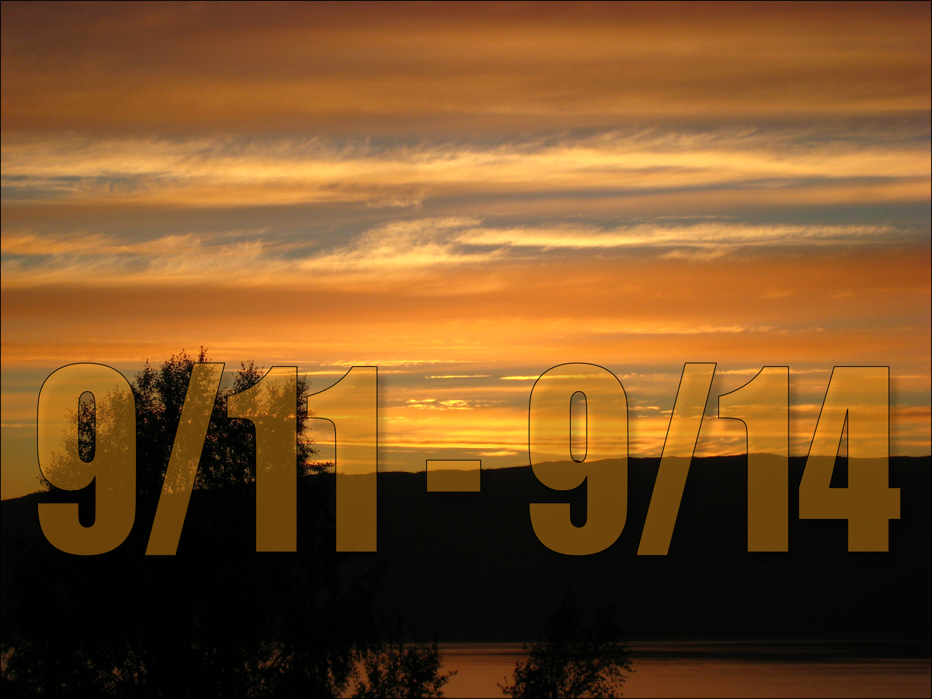
9-11 - 9-14 - never forgetting
My Great Grandparent’s House

My Great Granparent's House - Bø in Vesteraalen - 1936
Bogen in Ofoten
During World War 2 the German occupation force filled this fjord with piers, docks, barracks, roads and equipment for servicing naval vessels such as full size battleships and u-boats. Not much from that evil time resides in this beautiful, peaceful fjord today.

Bogen in Ofoten

 ***
***
 PLEASE REMEMBER: Hit the reload button in your browser in order to see the latest predictions!!!






 Northern Blog-O-Sphere