Narvik under the Winter Moonlight
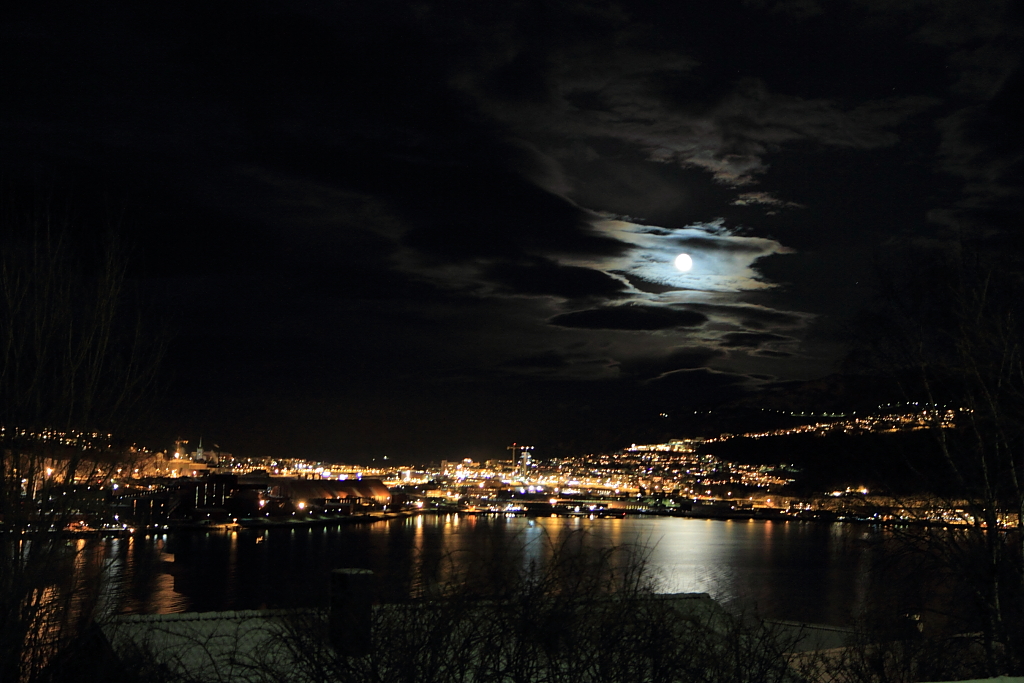
Beautiful Winter Scene this Evening - Narvik getting ready for Christmas
Real Heavy Winter Storm
I flew from Denmark to Northern-Norway on Thursday. That was just as a heavy low pressure weather system moved in from the West. And it hit the coastline of the two nations with extreme force. All the way up in the jet-stream where we flew at 32,000 feet, the turbulence could be felt all the way to the North. My friend Ole spent some time by the West Coast of Denmark in his cottage. He reported a real heavy shaking in the cottage as the storm gusts hit. But no harm was done. Ole graciously lent me this picture from the storm of 9th of December.
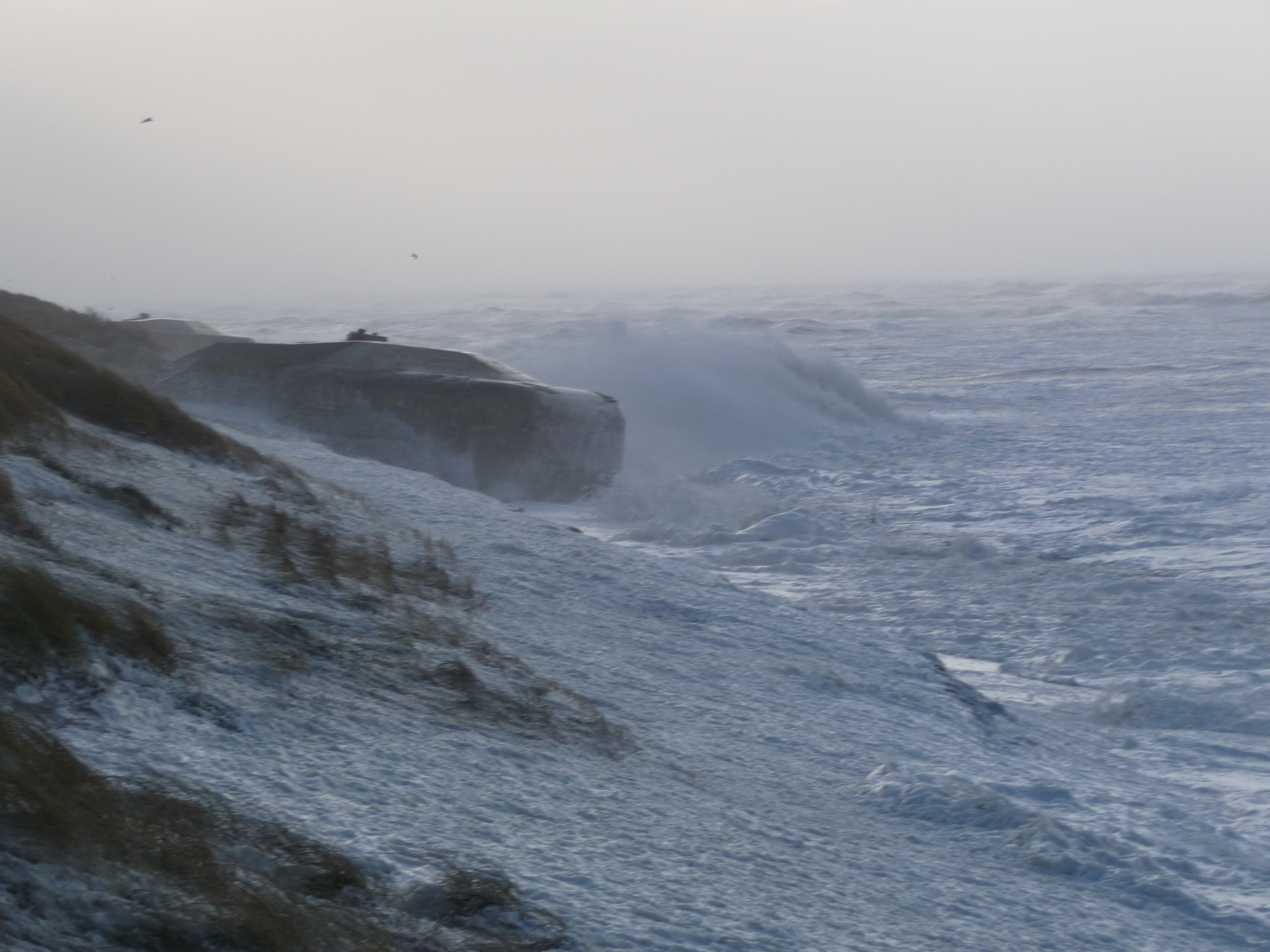
The violent storm reached the beaches of Western-Denmark on Friday the 9th of December. Photo: Ole Hejgaard
The Polar Night
Yesterday I took this panorama. This is approximately as light as it gets in Narvik this time of year.
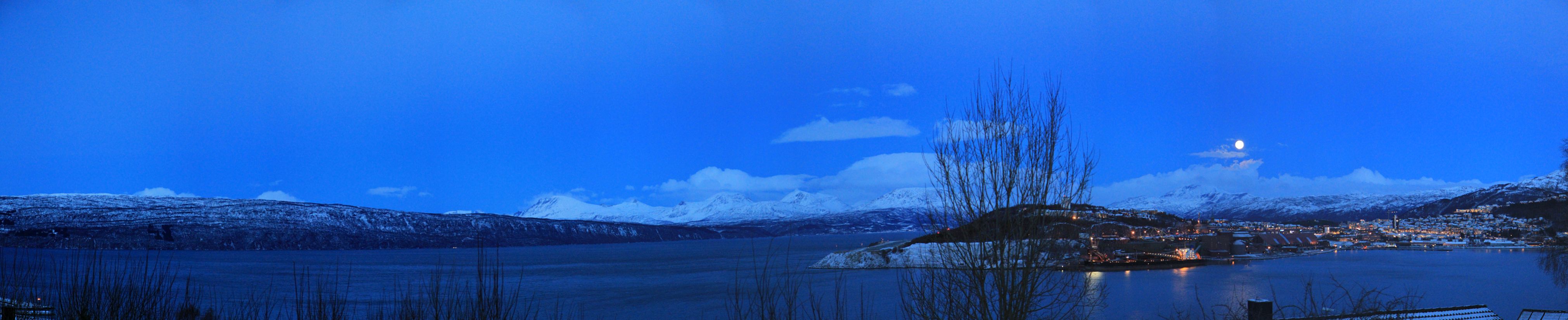
Panorama of Narvik - as light as it gets - no direct sunlight in the winter as the sun never rises above the horizon (click on the image for "The Big Picture")
Tick Tock – Supervolcano is getting closer
Katla – the icelandic “supervolcano” – is building up magmatic pressure. The term supervolcano is not a correct term – supervolcanos, like the ones in Yellowstone National Park and Toba are supervolcanos with VEI-8. VEI stands for Volcanic Explosivity Index. But Katla is one of the bigger volcanos in the world – and it’s magma chamber is approximately 10 cubic kilometers – enough for a VEI-6 to VEI-7 eruption. Iceland is built up from a weakness in the Earth’s crust on the Mid-Atlantic Ridge, where The North-American Plate and The European Plate move apart – travelling respectively in a westerly and easterly direction.
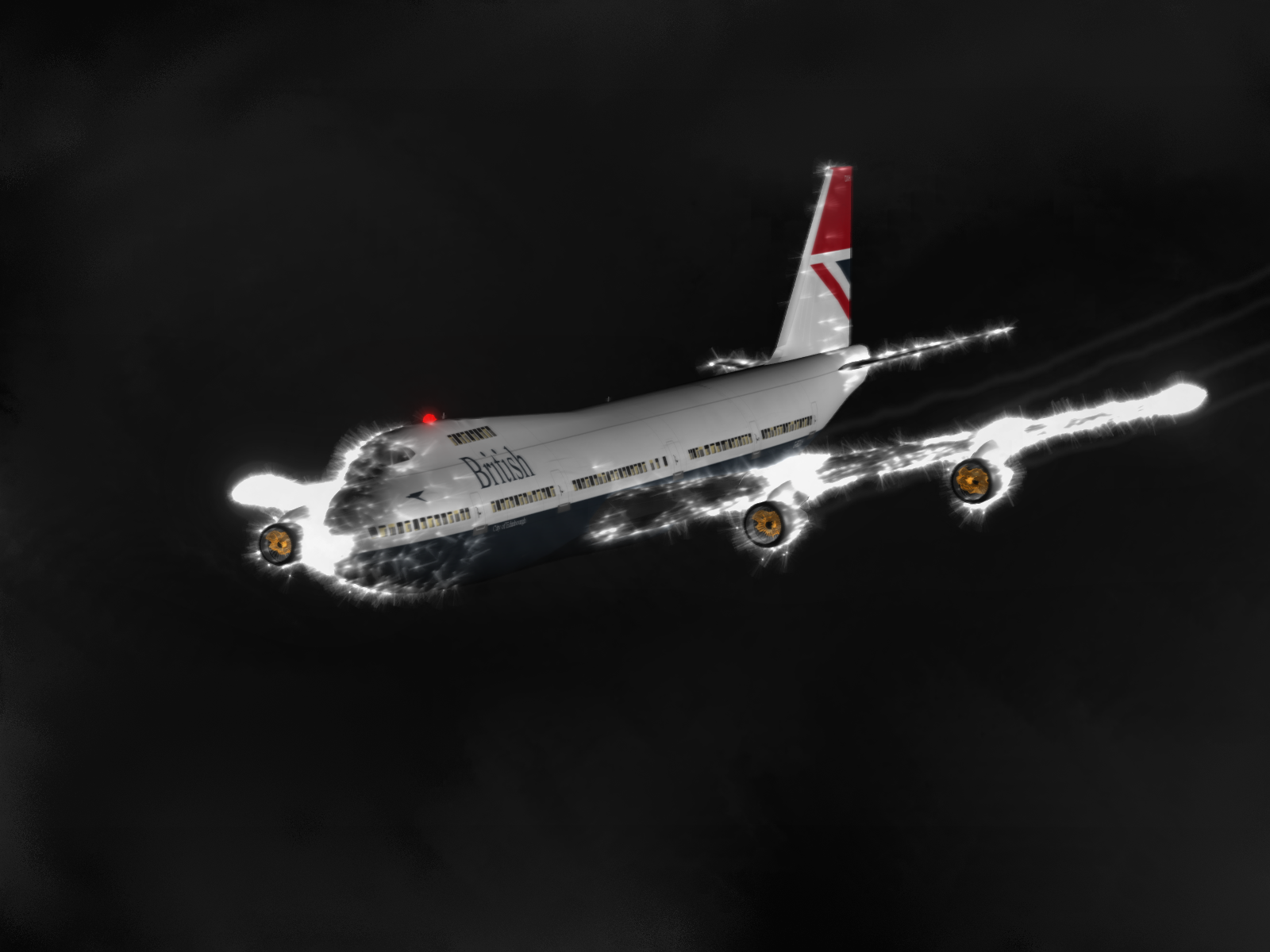
British Airways' "Speedbird 9" lit up by flying through volcanic ash in 1982 - Photo: Wikimedia Commons
Lately there has been a quite dramatic increased geological activity in the area. In April last year another volcano on Iceland erupted. Eyjafjallajökul – which is also situated underneath a glacier (jökul is the icelandic word for glacier) erupted violently. The combination of melted rock and water from the glacier gave a violent steam production, blowing hundreds of thousands of tons of volcanic ash several kilometers up into the atmosphere. Unfortunately this halted the airline traffic – I really don’t know why. The concentration in Europe was never enough to damage aircraft engines like the Gulunggung incident with British Airways Flight 9 in 1982 – which gave rise to the famous Gulunggung Gliding Club. But then again – governmental bodies have a tendency to act upon hunches more than facts.

Katla's last major eruption in 1918 - Photo: Wikimedia Commons
Still the Eyjafjallajökul volcano eruption of last year was enough to give a pungent smell of sulfur in Narvik one rainy afternoon 1,780 kilometers away from the volcano. In recorded Icelandic history Eyjafjallajökul has usually erupted just before Katla. Katla has – luckily – erupted more or less with intervals of 50 years since the year 874 AD. Luckily because every eruption reduces the pressure in the magma chamber, preventing even more violent eruptions. The last major eruption was in 1918. But the pressure has since been released some through a small eruption in 1955. Another clear indication is (usually?) a strong earthquake a few hours before the eruption. At least that’s what the Icelandic Sagas – historic tales, talks about. Katla is as such on overtime.
So – how dangerous is this? Well, I hate to say this – but a full eruption from Katla is very dangerous. Such violent volcanic eruptions is known to have blocked out the sunlight on the Good Mother Earth significantly for years.
The good news is – that global warming wouldn’t be an issue for quite a number of years. The bad new is, that crops need sunlight to grow. Reduced sunlight means reduced food-supply in general.
The other bad news, especially for people in Iceland, is the lahars – flash floods of melted glacier water that will effectively block roads and isolate communities. And there is the ash – blocking the sun, falling in Iceland the ash layer can reach several meters. Even in Continental Europe there will be a detectable amount of ash on the ground. The ash is rich in fluorine which – in previous eruptions – has shown to be a deadly toxin to both livestock and humans.
Should we worry? Well, I don’t! We live on a “living planet” which is formed by a dynamic geology. Volcanos erupt. That’s a fact. Worrying about it is no good. Just be thankful for every day Mother Earth isn’t clearing her throat!
More Dramatic Clouds

More-Dramatic Clouds
Fantastic Aurora Borealis!
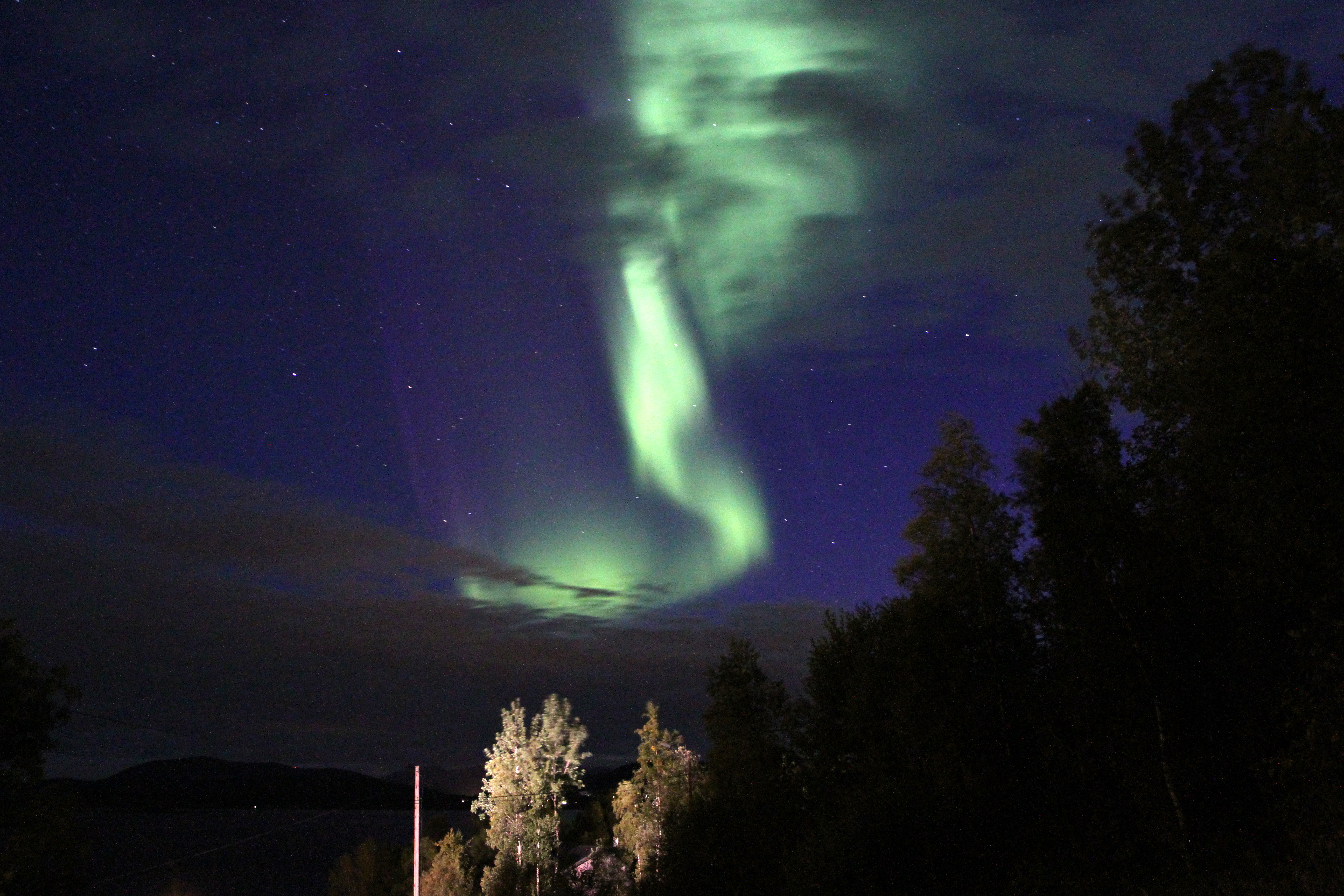
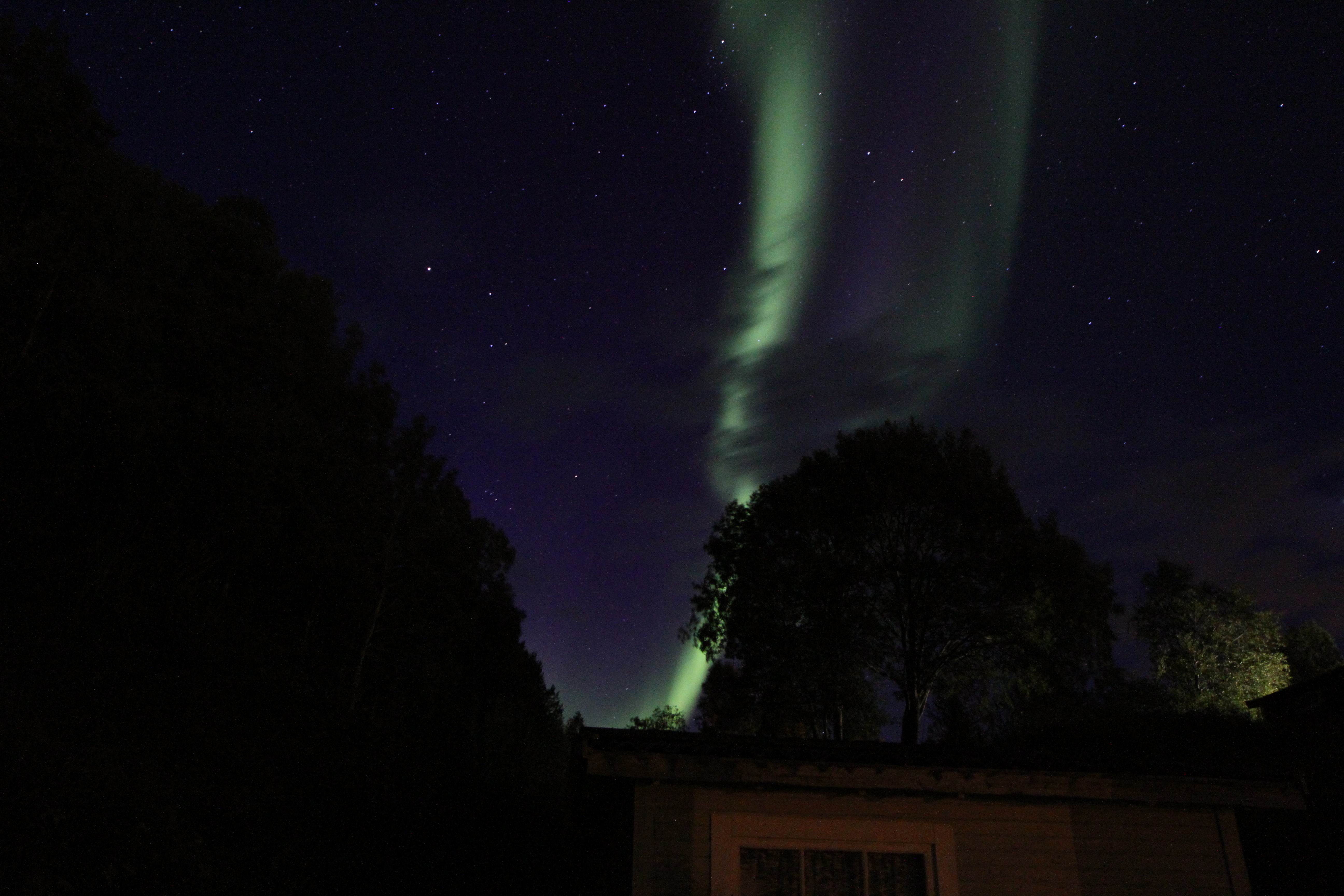
Yesterday I got to see on brilliantly fantastic Aurora Borealis Show! (Click on the pictures to see it full size! Click once, wait until it loads, then click once again and – VOILA! – you’ve godt it full size!)

Aurora Borealis last night - a spectacular show
More from yesterday’s Aurora-show
(Click on the pictures to see it full size! Click once, wait until it loads, then click once again and – VOILA! – you’ve got it full size!!)


Trollsk – Unreal
Yet another photo from the harbor tonight. The fog makes a “trollsk” atmosphere, meaning unreal or unbelievable.
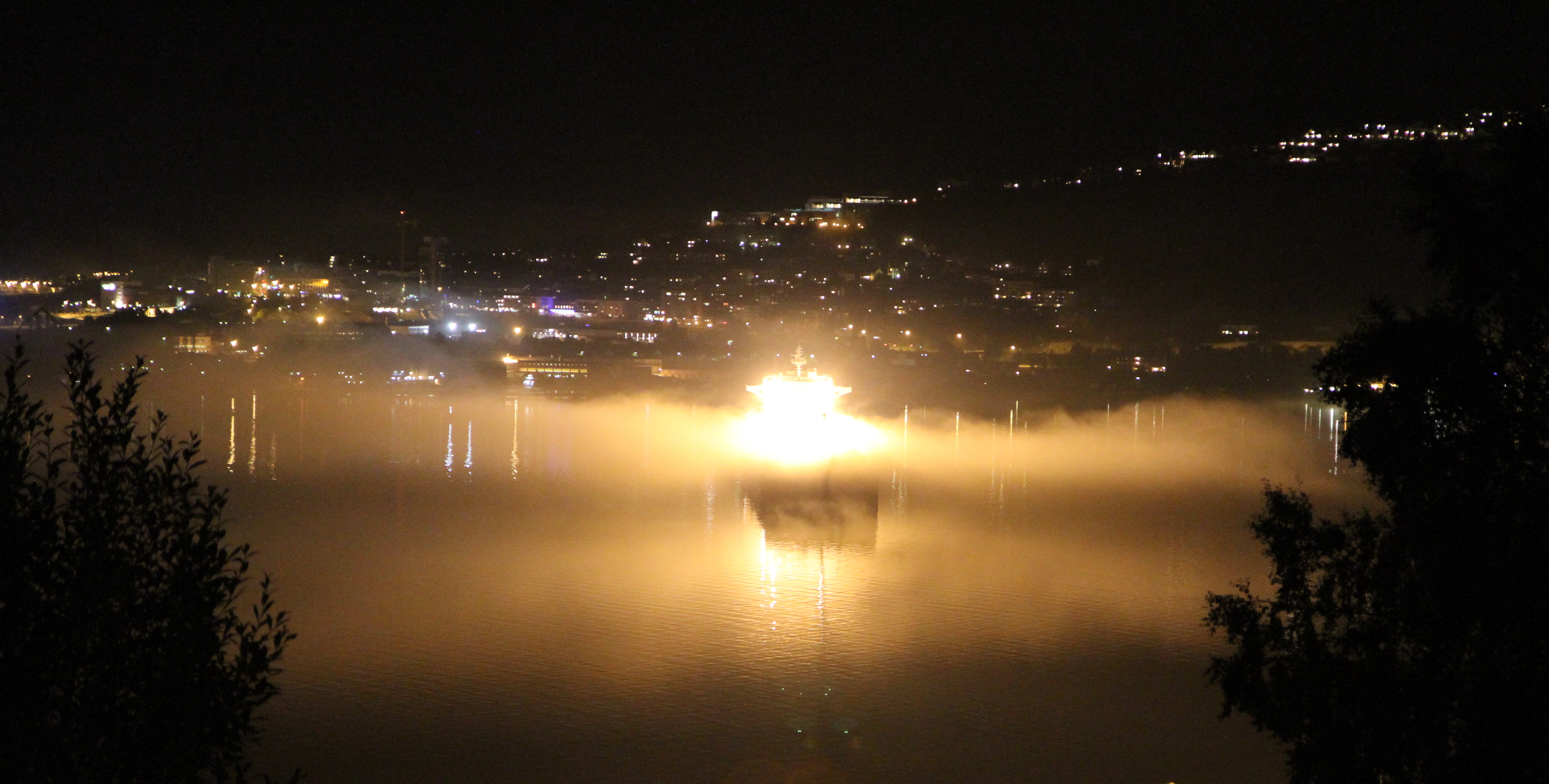
Bulk Carrier ablaze - not she isn't - her deck lighst are just cover with the dim fog - Please click the picture to see the full resolution, and the zoom in further to see the smalles details
Tonight’s Panorama of Ofoten Fjord with distant cumulus clouds in the background
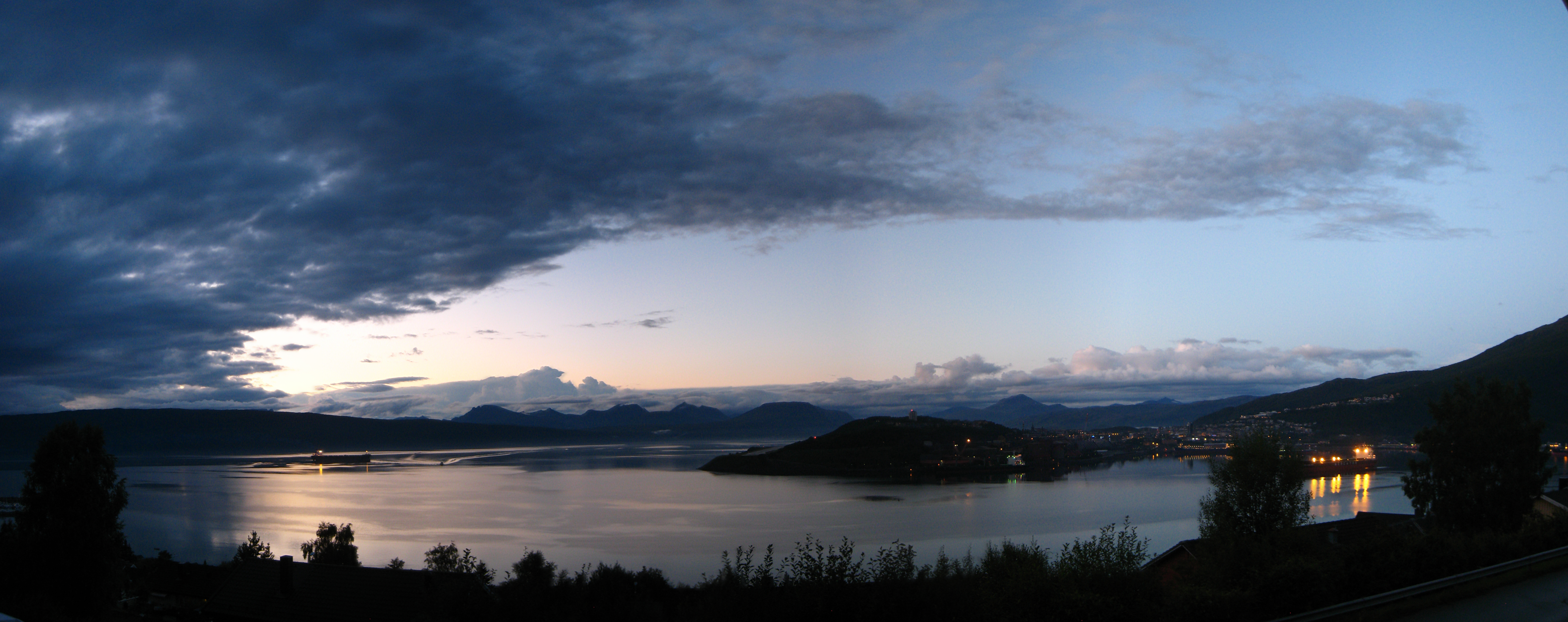
Tonight's Panorama of the Ofoten Fjord with cumulus clouds in the background
Try landing on the Moon!
If you’re a history-buff, love space exploration like me and love flying – you’ll have to try this game!!! Moonlander by PlanetInAction.com I have only tried it in Google Chrome and it requires Google Earth plugin. If you’ve got the latest version of Google Earth and Chrome installed on your system, you have already got the plugin.
Steering the landing-craft of Apollo 11 – the first landing-craft to put man on the Moon – (at 02:39 UTC on Monday July 21 (10:39pm EDT, Sunday July 20), 1969) – is quite easy!
Use the left ← and right → arrow keys on your keyboard to control the pitch of The Eagle. Fire your engine in bursts by pressing the space-bar button on your keyboard. You can try a landing with unlimited fuel, but that is cheating ;o)
Keep an eye on the fuel gauge top right side, and keep the speed in the green area!
First you’ll need to break the orbital insertion velocity. Then pitch the craft upright when you’re over the (red) target landing area. Keep the speed in the green zone! Nice and smooth: touchdown! When you succeed, you’ll hear the actual recording from the landing from Mission Control Houston.
I prefer a full screen to get the most details.

Touchdown! Limited fuel-landing - smooth as a baby's bottom
Northern Lights and a moonlit Night
Romantic scenery panorama

Please CLICK on the picture to see it in full resolution. Northern light (aurora borrealis) with moon shining on the mountains in the background
Watching the “Sky Fire” while fetching some Fire Wood

Great Northern Lights Show Yesterday above Narvik (please click the picture for highest resolution)

Northern Lights Above the City and the clouds to the right in the picture (please click the picture for highest resolution)
-22 degrees and a Great Show
I stood out in the cold -22° Celcius (-7.6° F) for nearly a couple of hours trying to get a picture of the meteor shower – The Quadrantids. The sky was filled with them but my pocket camera – a Canon IXUS 850IS simply doesn’t have the lens nor chip to catch these really fast specs of light as they flash across the sky in the fraction of a second. But it was a very nice spectacle though.

 ***
***
 PLEASE REMEMBER: Hit the reload button in your browser in order to see the latest predictions!!!






 Northern Blog-O-Sphere