The Season of The Carotenoids
Why do the leafs on trees become yellow, orange and red in the autumn? Well, the answer is, they have these colours in the spring and summer as well. But then it is not visible because of the strong green colour reflected by chlorophyll. The colours we see are actually the colours that the tree doesn’t use in the production of sugar through photosynthesis. These colours are reflected and the light that is actually used in the photosynthesis is absorbed.
The red, orange and yellow colours we see in the leafs in the autumn is the reflection of light from carotenoids. These substances are cheap for the trees to produce, and the trees can afford to shed these. The chlorophyll on the other hand is a very precious and valuable molecule for the trees, so these are transported to the roots in the autumn leaving the carotenoids to “light up the forests in the beautiful, warm colours. Next spring the trees formes new leafs and pumps chlorophyll back into the freshly formed leafs.
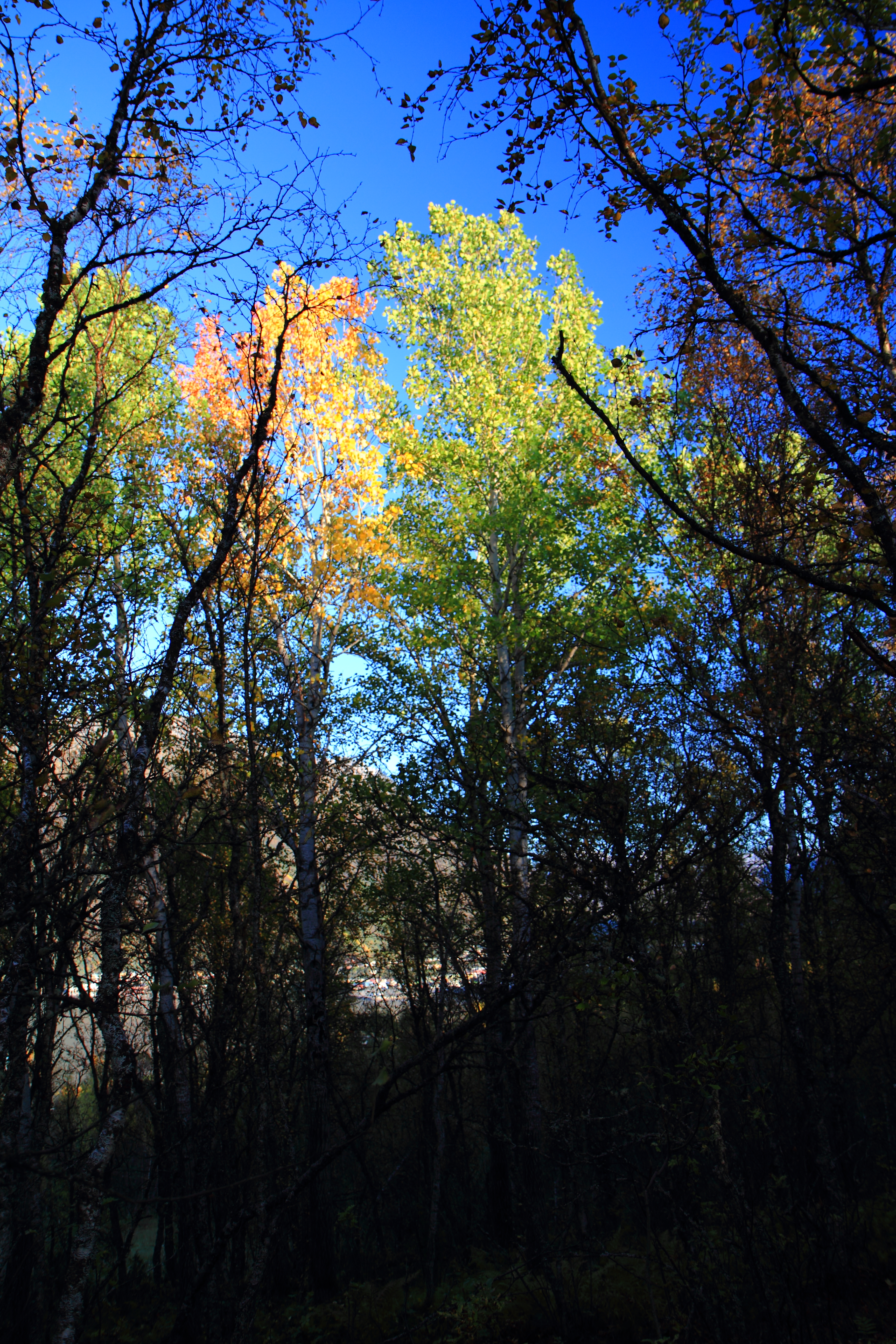
Common Aspen - Populus tremula (local dialect: Osp) - has stored it's chlorophyll for the winter. This photo was shot today.
The Sleeping Queen – Den Sovende Dronning
Den Sovende Dronning (1,576 meters) – which means “The Sleeping Queen” south of Narvik as seen from Ankenesfjellet (mt.) this evening.
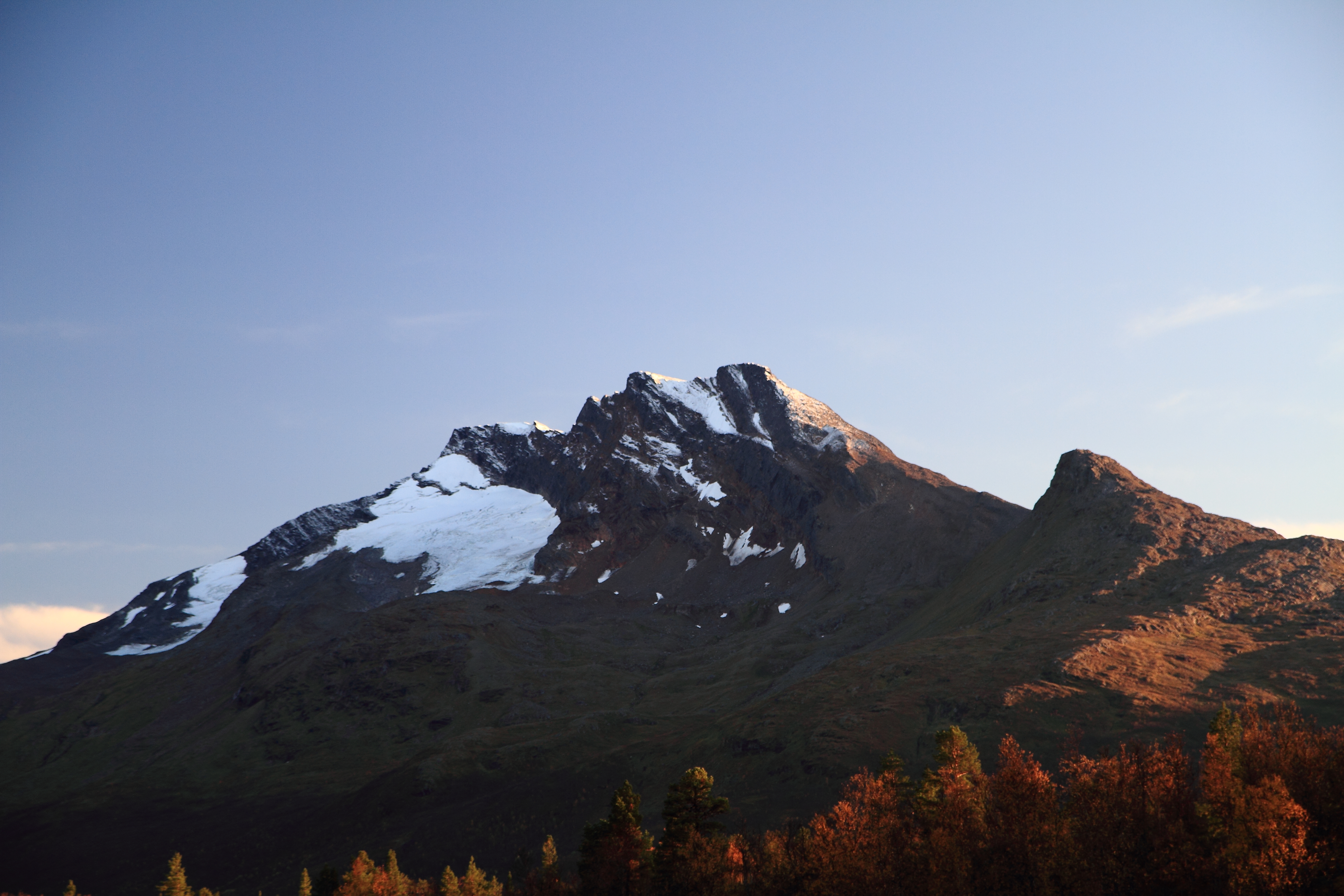
Den Sovende Dronning (1,576 meters) this evening.
And the sunset
This photo was taken extremely quicly on semi-automatic, but my camera works best when it is manually set. Anyhow – this is the city of Narvik just after sunset today.

Narvik tonight - Just after sunset
Oh yeah – Winter is coming!
This picture was taken today and the powderd top – Beisfjordtøtta – is only 1,448 meters above sea level.
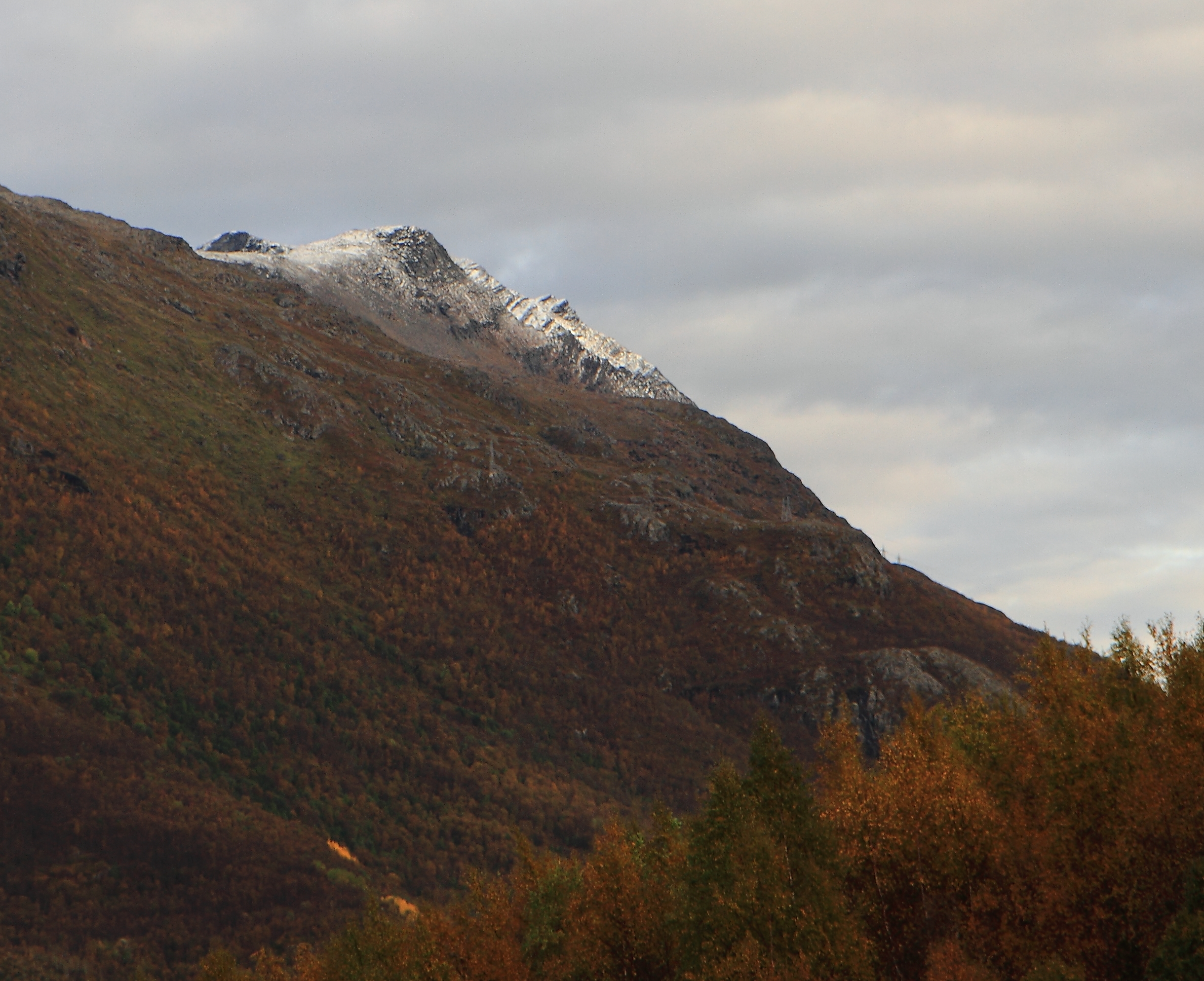
Beisfjortøtta 1,448 meters
The Hops is overly ripe – A shame that we don’t make beer…
The hops in the garden is just for pleasing the eyes. No beer production here – otherwise maybe these delicious fruits would have been harvested already. I am quite amazed that my mother’s Humulus lupulus is blooming this far to the North. After all we’re at 68°26’21” North. In the center of Greenland at the same latitude, the ice sheet is 2,000 meters thick…
Anyway – took a few shots of the hops on a rainy afternoon. Hope you enjoy it!

Hops in Narvik on a rainy day
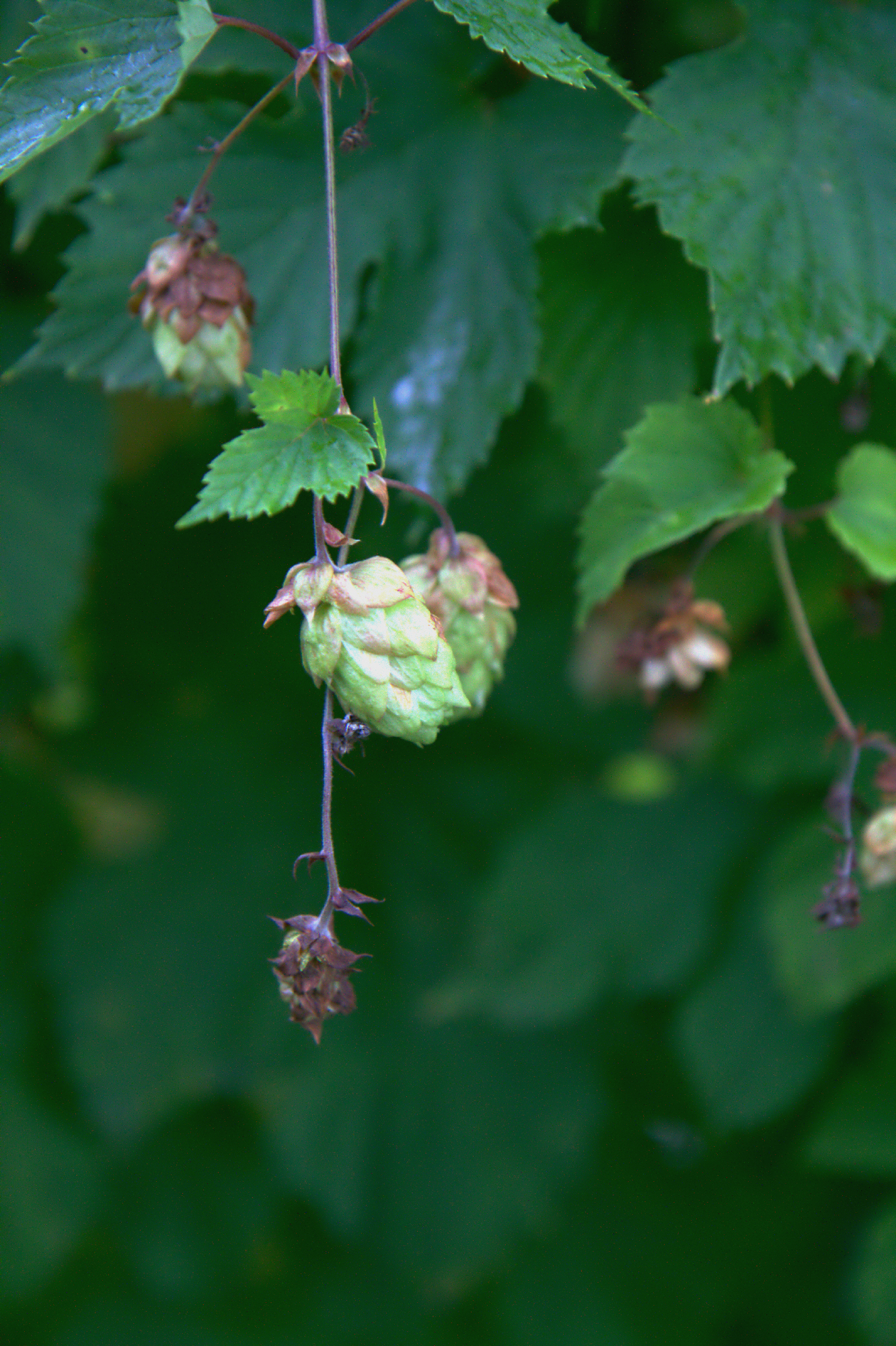
Hops - close up
Surplus Water
Ofoten – along with huge parts of Northern-Norway and Western Norway – is a big producer of hydroelectric power. In Narvik there is a small hydroelectric power plant. The water comes from lakes at approximately 800 and 600 meters above sea level. The water is then first used to produce electric power. It is then – as a precautionary measurement UV-radiated, although it is extremely clean and then send out through pipes to supply the citizens with the approximately 200 liters per person used for daily consumption.
Although it has been I dry summer, it has rained enough the past few days to produce enough water for the lowest magazine to spill unused water into the Taraldsvik River.
This picture was taken last night with long exposure. Wondering what the weather is like by the power plant? Click here…
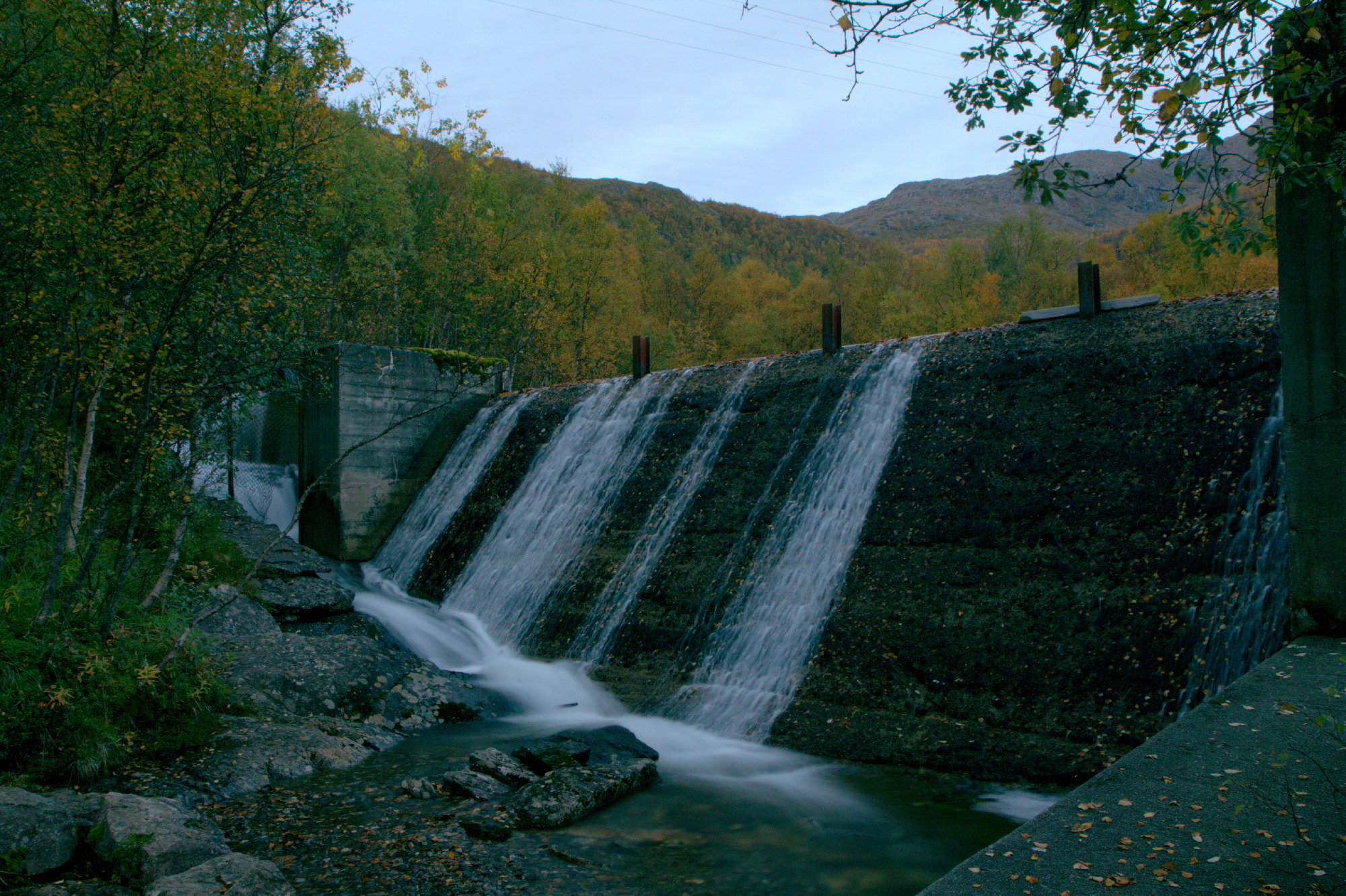
Surplus Water from the hydroelectric powerplant/municipal waterprocessing facility
Ankenes Mountain Mirror

Ankenes Mountain mirrors in the Beisfjord
Trout Joy

Trout jumping in one of the Østervik Mountain Lakes
Blazing Sunset Yesterday
This sunset formed outh over the Ofoten Fjord yesterday. It made me wonder about the futures of our children.
The future of our children today is a mystery – and the future of their children is even more so. Will they see the natural world and the wild creatures therein only as historical snapshots? Was this snapshot one of those snapshots? The pivotal moment for modern civilization is here. Like the proverbial canary in the coal mine, all wild creatures bare testament to the health of our external metabolism, our natural world – the environment.
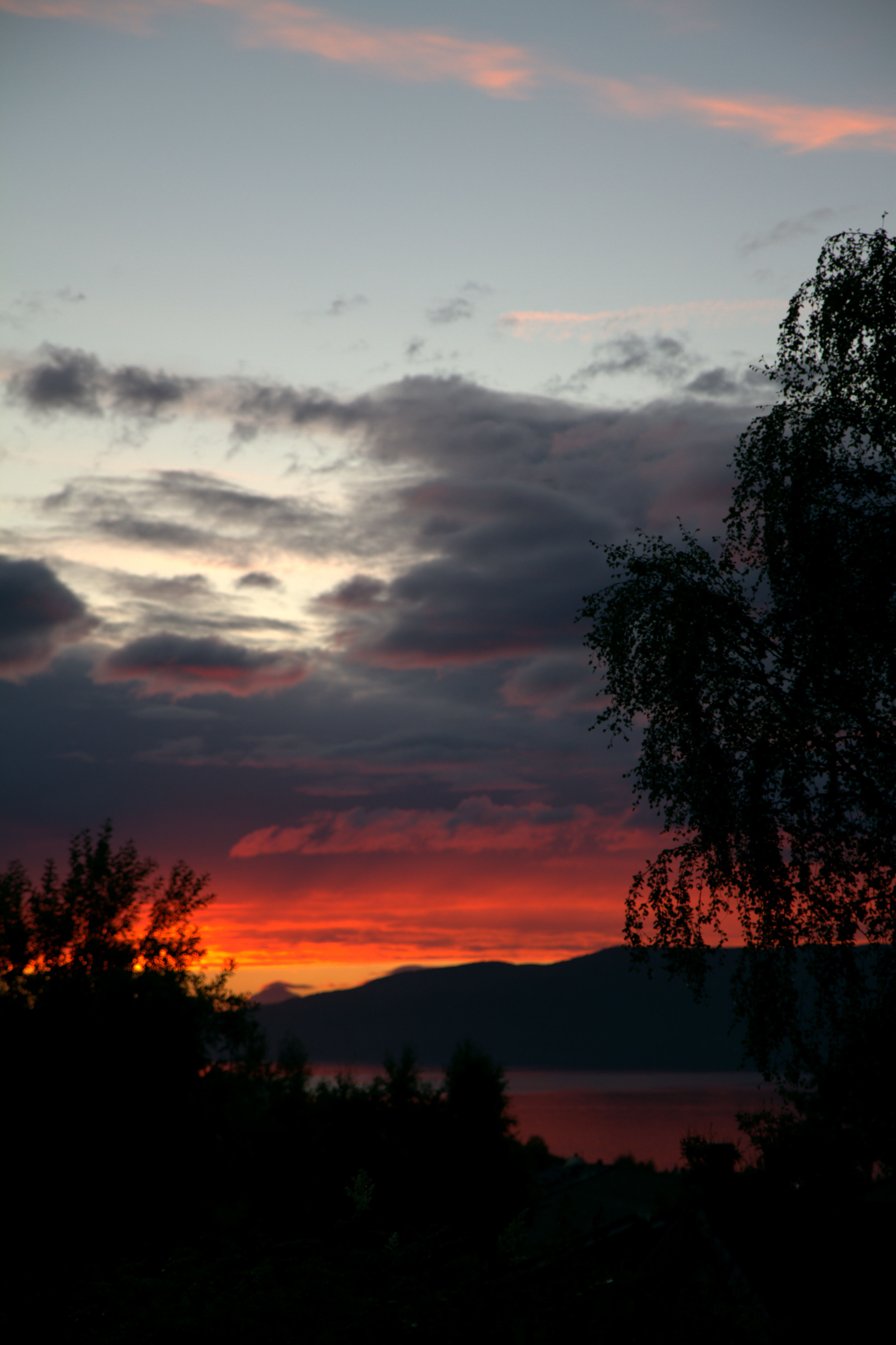
Sunset on the Ofoten Fjord

 ***
***
 PLEASE REMEMBER: Hit the reload button in your browser in order to see the latest predictions!!!






 Northern Blog-O-Sphere