1 Year Anniversary – THANK YOU!
Happy 1 Year Anniversary! And THANK YOU for making it fun to write!
Scene from Narvik Harbour
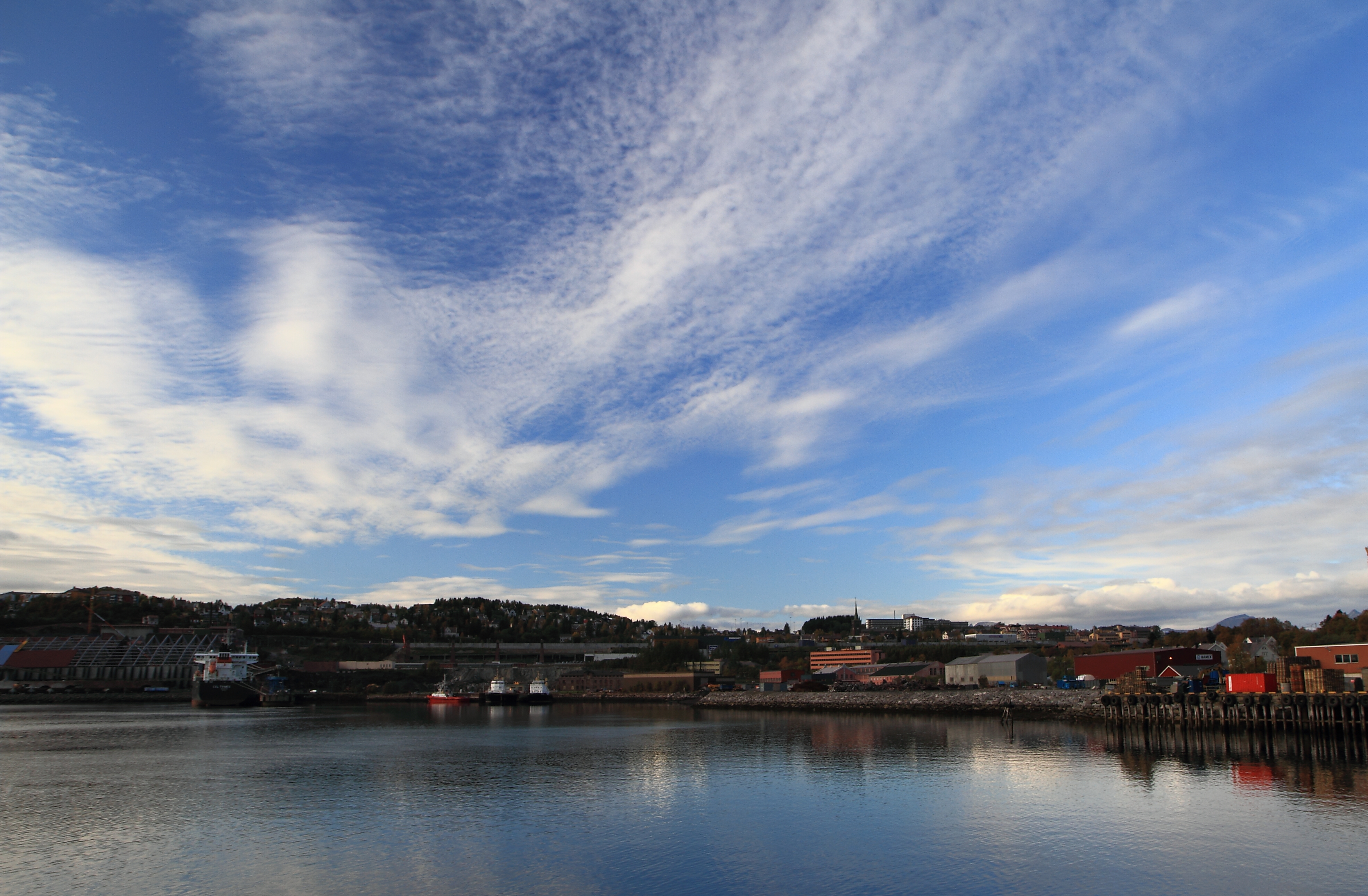
Scene from Narvik Harbour
Mt. Tøttatoppen 1,249 meters towering above the Rombak Fjord
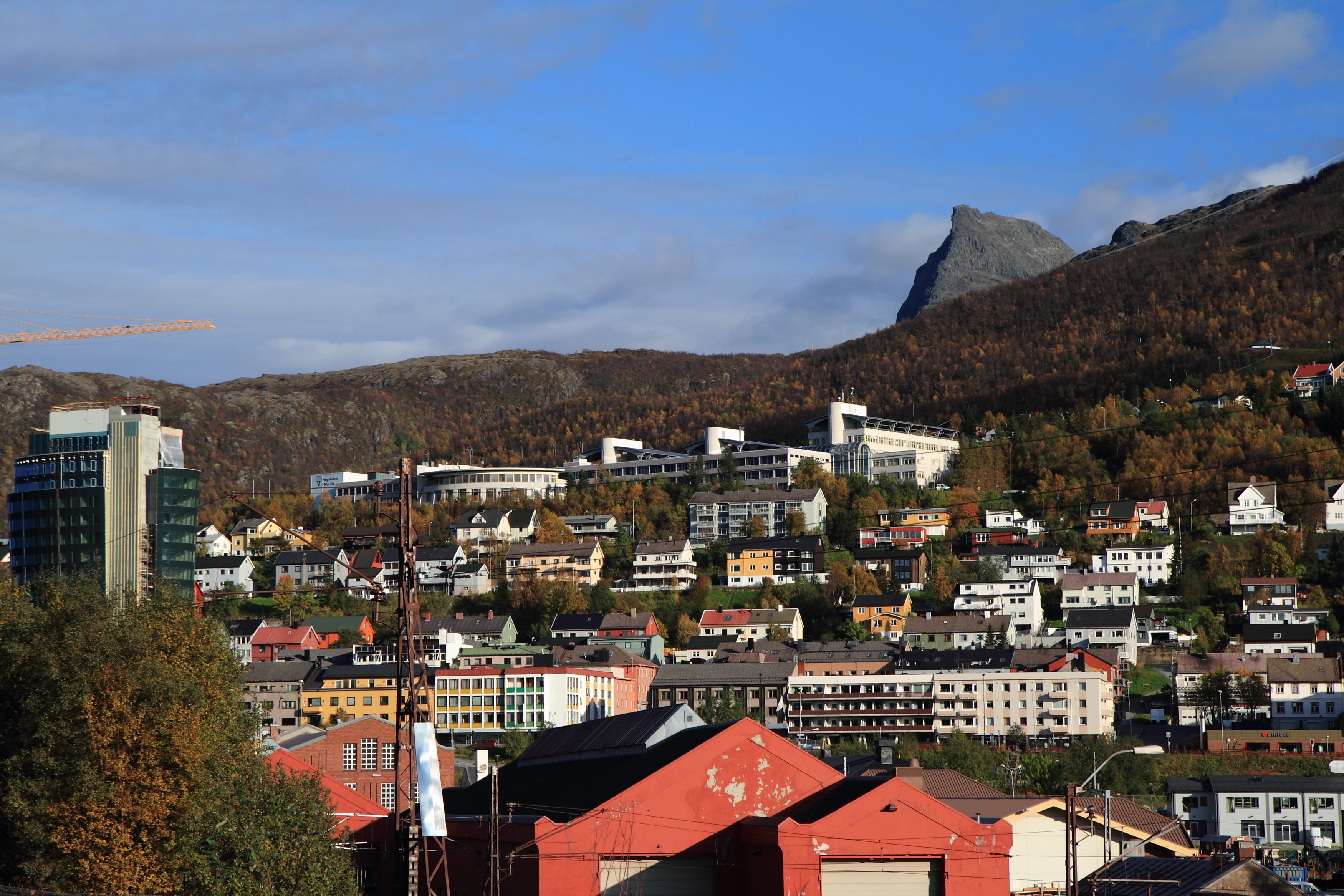
Mt. Tøttatoppen 1,249 meters - below and a bit to the left - the Polytechnical College in Narvik and to the left the new Rica Hotel being built. In the foreground the red train garrages and workshops.
Cutter “Ariadne” – Narvik – Narvik Kystlag
The cutter “Ariadne” this evening in the port of Narvik. “Ariadne” is owned by Narvik Kystlag – an organization for the preservation of traditional vessels in the Ofoten area. Ariadne was taken over in 2005 by Narvik Kystlag from Nordnorsk Fartøyvernsenter og Båtmuseum – an organization for the preservation of traditional North-Norwegian sea-faring culture.
Classic clipper hull – stunningly beautiful lines – although it looks like tha hull has been somewhat rebuilt throughout the years.
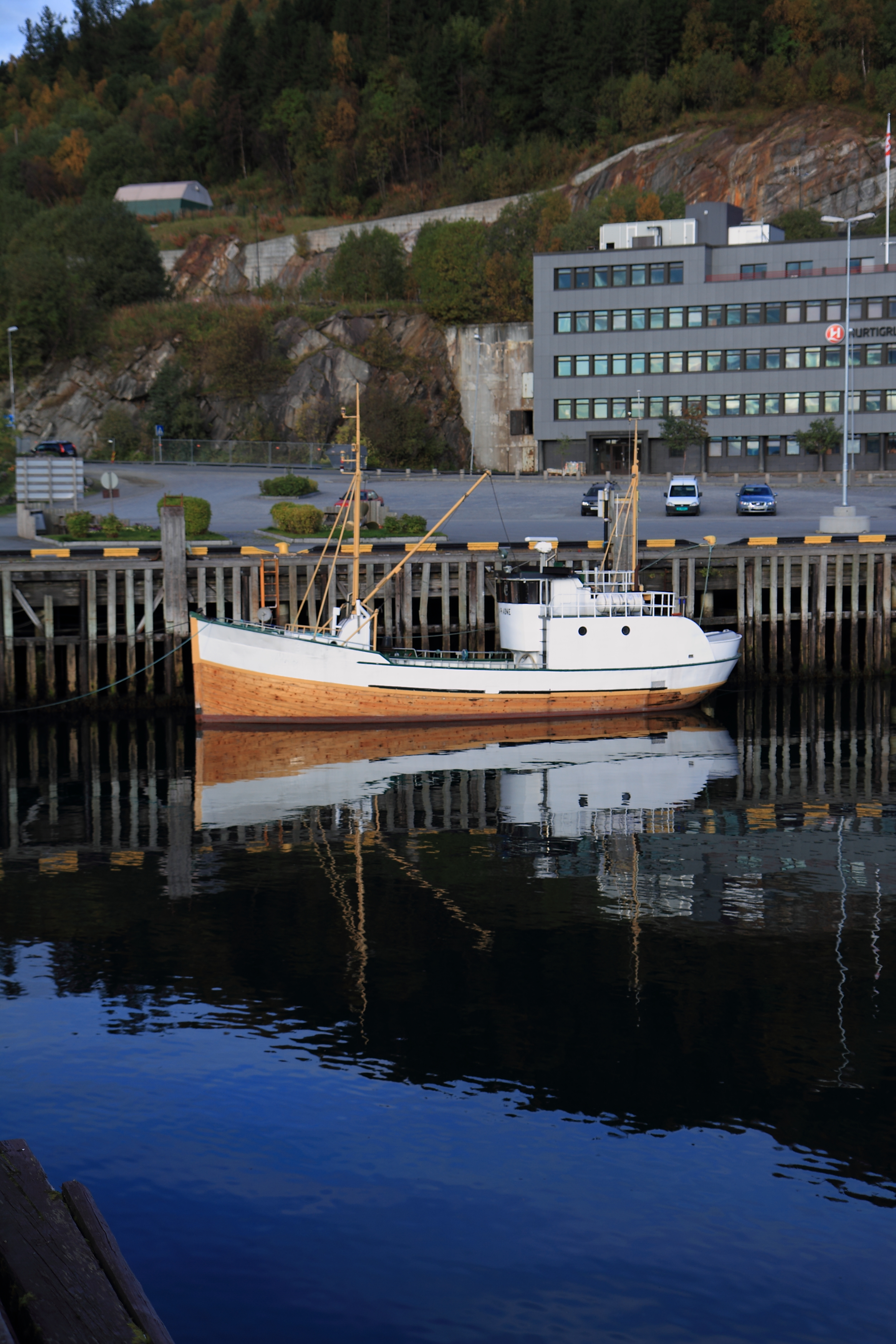
The cutter Ariadne
Moon is rising – Sun is setting on Narvik
Moon is rising – Sun is setting on Narvik. Our beloved airport Narvik Airport (NVK) is lit in the dusk. In the Foreground you can see the 180,002 ton bulk carrier “Navios Happiness” of Malta being loaded with iron ore by pier 5 – destined for El Dikheila.

Moon is rising - Sun is setting on Narvik
Treebeard
The black “beard” you see hanging from the branches of this birch has got really nothing to do with Treebeard – the ent – from Tolkien’s “Lord of The Rings”. It is called “treskjegg” in Norwegian – directly translated: “Treebeard”. It is actually one of extremely many species of Lichen (pronounced “lai-kenn”. Lichens are actually a symbiotic organism that consists of fungi and algae. The fungi provides proteines, salts and shelter. The sheltering structures contains, in addition to the fungus cells, algae-cells. The algae has chlorophyll and thus it produces sugar which it feeds to the fungus. A tiny ecological system in it self.
My friend Gunnar has studied lichens for a long time for The University of Tromsoe. Lichens are very sensitive to the environment and mapping lichens in a specific area, species, how much there is of the various species etc., is a very precise indicator of environmental changes; climate, acidity and pollutants. Any change in these paramaeteres can quite quickly be registered in the compositions of lichens, and thus has become a very interesting field in Biology and Ecology.

Treskjegg - "treebeard" - hanging from a birch. This is actually a lichen - a symbiosis between a mycobiont and a photobiont. In the background The Fagernes Mountain bath in sunlight from the setting sun.
Sunset on the village Haakvik (Håkvik)

Sunset on the village Haakvik down to the left
The Ofoten Fjord this evening

Panorama of The Ofoten Fjord and in the foreground Ankenesstrand in the middle the city of Narvik and in the background Bjerkvik.
“The Big 5’er” – Havleik (N-5-Bø) and my Grandfather
I guess it’s in my Viking Blood. There are few other places I feel more at home than by and – especially – on the seas! And I know at least one place where the genes ran especially salty in the family – my Grandfather, Rolv Meyer Bjugn. Today I am sailing “just for fun” as 1st Officer on the proud Danish Jagt “Klitta” where I help teaching cub scouts about the joys of The Big Blue.
I just revisited some old pictures of my grandfather and the “modern” fishing vessel – the old N-5-Bø (N-5-Boe, in case the last letter in the registration doesn’t show correctly on your screen) – HAVLEIK. They later on bought a new, bigger wooden hull fishing vessel (63 ft.) and took the same registration number – N-5-Bø and the name Havleik. The “new” Havleik was later sold. She sank after a blazing fire off the coast outside Nesseby in Varangerfjord on the 25th of March 2008 – the entire crew made it in the rafts – but that’s another story. That fire put an end to the 89 year long Havleik era.
The first Havleik
- was built in 1919, with
- a 46 feet clipper hull – width 16.2 feet
- In 1920 she was registered with a Bergsund 28 hp engine. The shipping company owning the ship at that time was registered to Peder Bjugn from Lynghaugen, Bø (Boe) in Vesteraalen.
- In 1936 she was registered with a Norwegian Wichmann 30 hp (the Wichmann was a semi-diesel engine – that is a two-stroke diesel engine).
- Havleik consists of the two Norwegian nouns “hav“, which means sea and “leik” which means “play” (or loosly translated, “joy”). Thanks to Inge M. Johansen – gamlebilderfravesteralen.origo.no – I found these older b/w photos of this classic beauty. Locally she was known as “The Big 5’er” – relating to the registration number N-5-Bø (N for Nordland – the thrid northernmost county – fylke – in Norway).

Havleik – the original vessel in the annual North-Atlantic cod fisheries outside the Lofoten Islands. My grandfather – Rolv – on the fore deck.
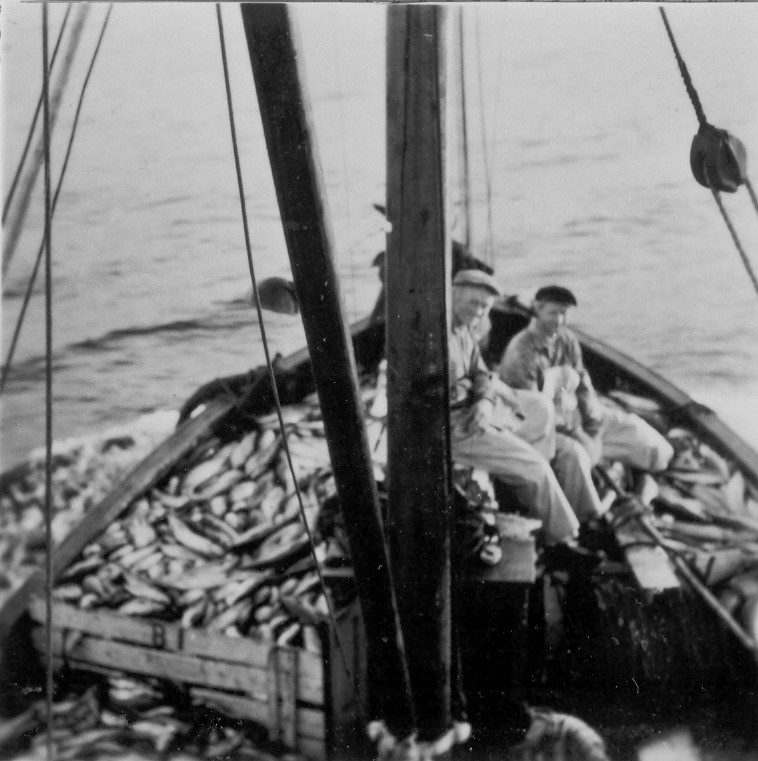
A good catch! 45.000 kilograms of pollock in this load. My grandfather Rolv to the left and Johan Bjugn to the right.

No more freeboard to run on! Loaded to the brink! It was always a question to make a living – not always a question of safety at sea…
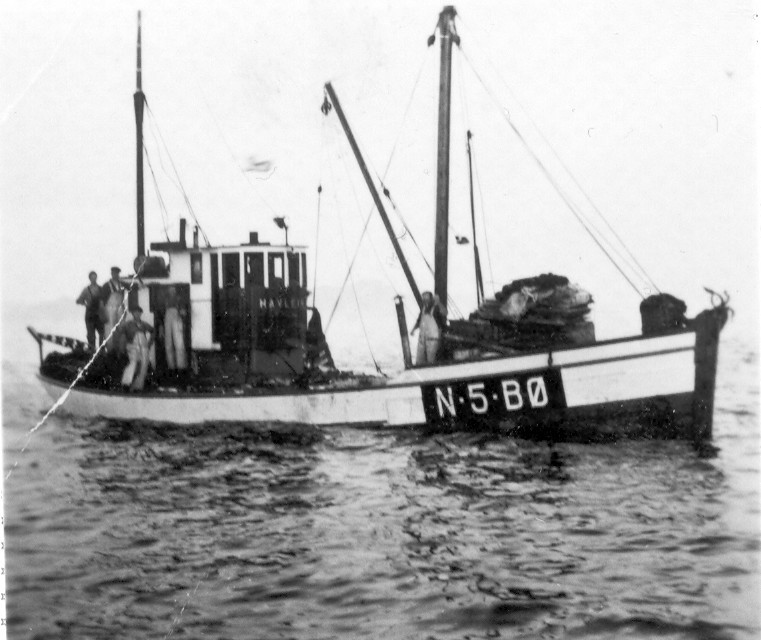
Loaded to the brink. My grandfather Rolv on the aft deck – number two from the left.
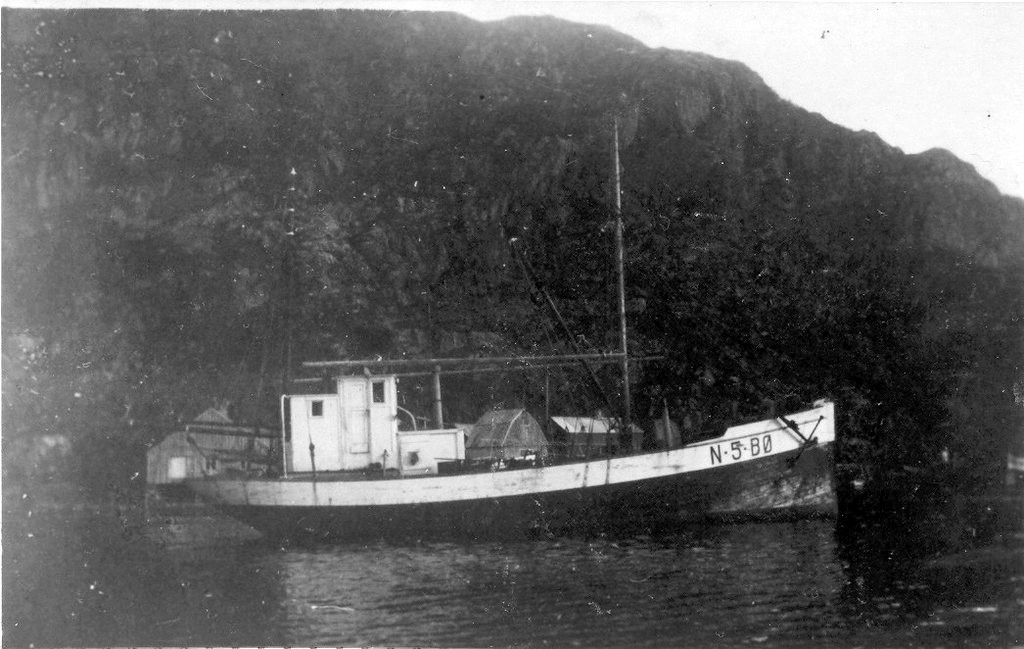
A Classic Beauty – Havleik with her beautiful clipper lines. Slick lines for tackling rough seas.
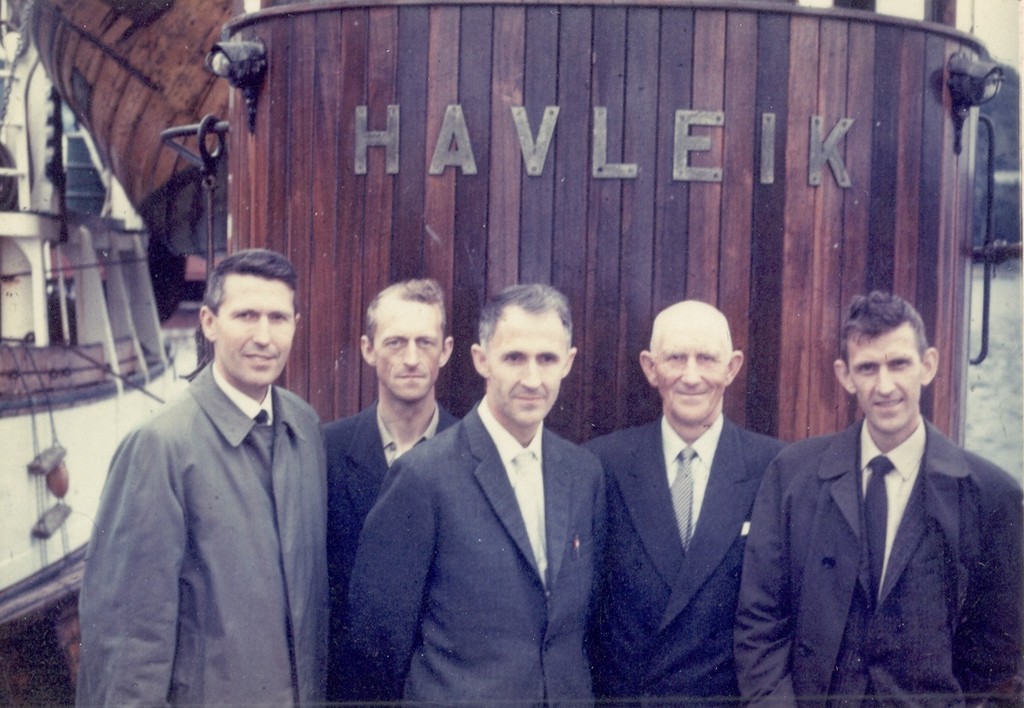
Havleik – a family business. From the left Johannes Bjugn (a highly decorated officer – Lieutenant Colonel – from the first Allied Victory in WW2 – The Battle of Narvik), Leif Bjugn (a fantastically kind man and skillful fisherman), Guttorm Bjugn (former chief of police in Bø in Vesteraalen), Peder Bjugn (fisherman) and Kyrre Bjugn (telephone technician) – all highly respected men.
The End
When the new Havleik was bought – the old one was sold to Kvæfjord outside Harstad. There she laid by an old peer year after year until her hull finally sprung a leak and she sank to the bottom. She was never recovered. An immensely sad way to treat such a gemstone of proud Norwegian culture and a classically beautiful ship.
So what about the fish?
After the fish was landed by the regional fishing vessels and preserved by freeze drying (known as tørrfisk in Norwegian meaning “dried fish” – stockfish), salting and/or – salting and sun drying (known as klippfisk), the produce was loaded onto bigger vessels known as Jekter or Nordlandsjekter. These are quite similar to my vessel – the Danish Yacht Klitta – only bigger. These sailed up and down the perilous Norwegian Coast, primarily to and from Bergen. In Bergen the fish was loaded onto even larger vessels and exported to Europe. Especially Portugal, Spain and Italy has historically been huge importers of Norwegian dried and salted fish.
The North-Atlantic fish (especially the species of cod and herring) is extremely nutritious and the cold, windy climate in the winter was perfect for freeze drying fish. The fish was hung on tall wooden racks and froze while at the same time dried (a process known as sublimation). Freeze dried fish – stockfish – has been known to be edible more than 100 years after being dried…
The other main method of preserving the fish, was salting it and sun drying it on the rocks. One Norwegian word for these rocks – and the same word as the English name “cliff” is “klippe” – hence the name “klippfisk” – “cliff fish” – clipfish.
Of course – fresh fish has been a primary source of nutrition for Norwegians since long before the Viking Period. But preservation has always been necessary for storage in case the weather didn’t allow for fishing. Later on these preserved and highly nutritious “protein bombs” became important sources for proteins in the mediterranean countries like Portugal, Spain and Italy. Later on canned Norwegian fish also became hugely popular in other European countries like Great Brittain.
The Hops is overly ripe – A shame that we don’t make beer…
The hops in the garden is just for pleasing the eyes. No beer production here – otherwise maybe these delicious fruits would have been harvested already. I am quite amazed that my mother’s Humulus lupulus is blooming this far to the North. After all we’re at 68°26’21” North. In the center of Greenland at the same latitude, the ice sheet is 2,000 meters thick…
Anyway – took a few shots of the hops on a rainy afternoon. Hope you enjoy it!

Hops in Narvik on a rainy day
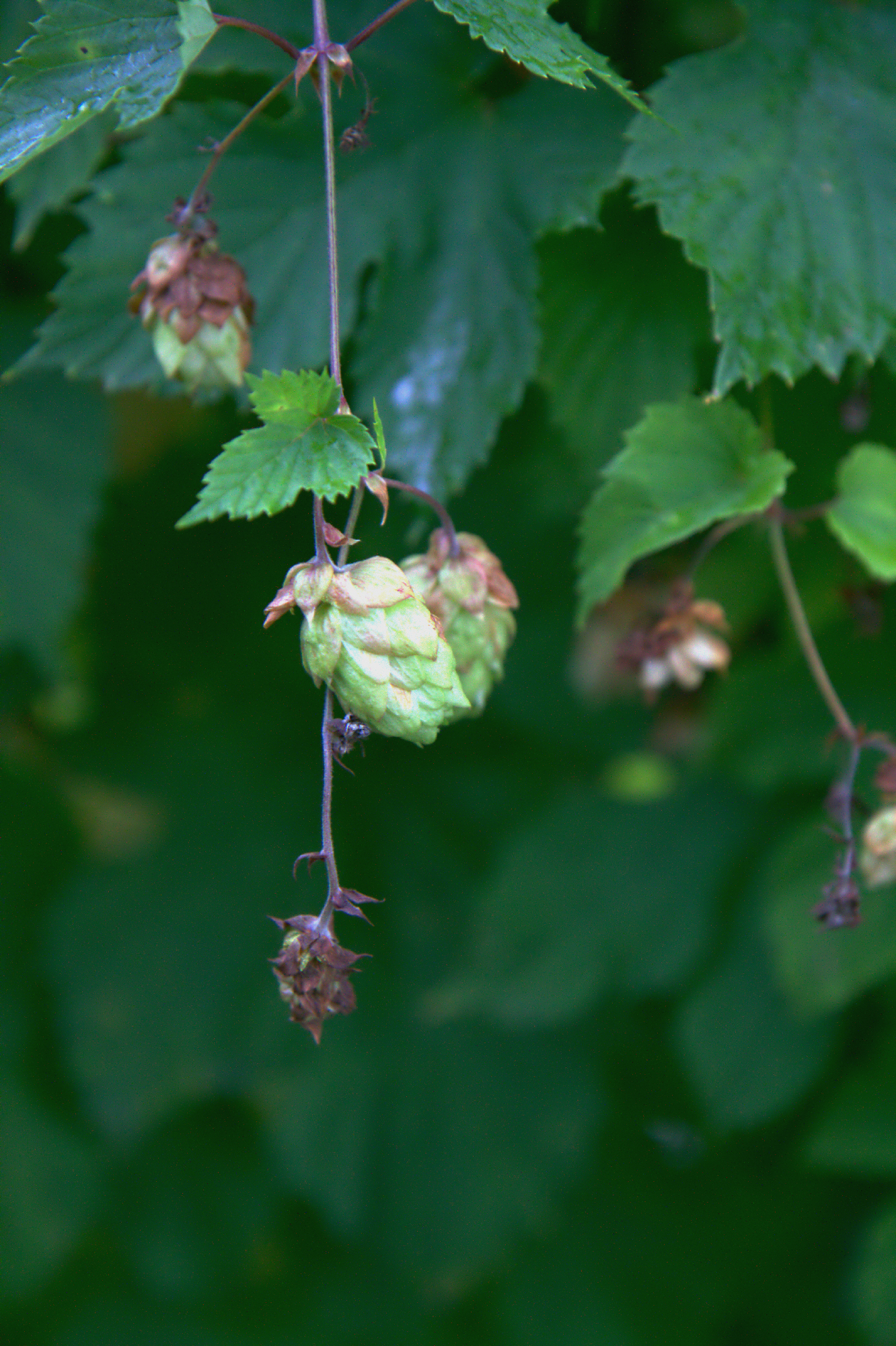
Hops - close up
Surplus Water
Ofoten – along with huge parts of Northern-Norway and Western Norway – is a big producer of hydroelectric power. In Narvik there is a small hydroelectric power plant. The water comes from lakes at approximately 800 and 600 meters above sea level. The water is then first used to produce electric power. It is then – as a precautionary measurement UV-radiated, although it is extremely clean and then send out through pipes to supply the citizens with the approximately 200 liters per person used for daily consumption.
Although it has been I dry summer, it has rained enough the past few days to produce enough water for the lowest magazine to spill unused water into the Taraldsvik River.
This picture was taken last night with long exposure. Wondering what the weather is like by the power plant? Click here…
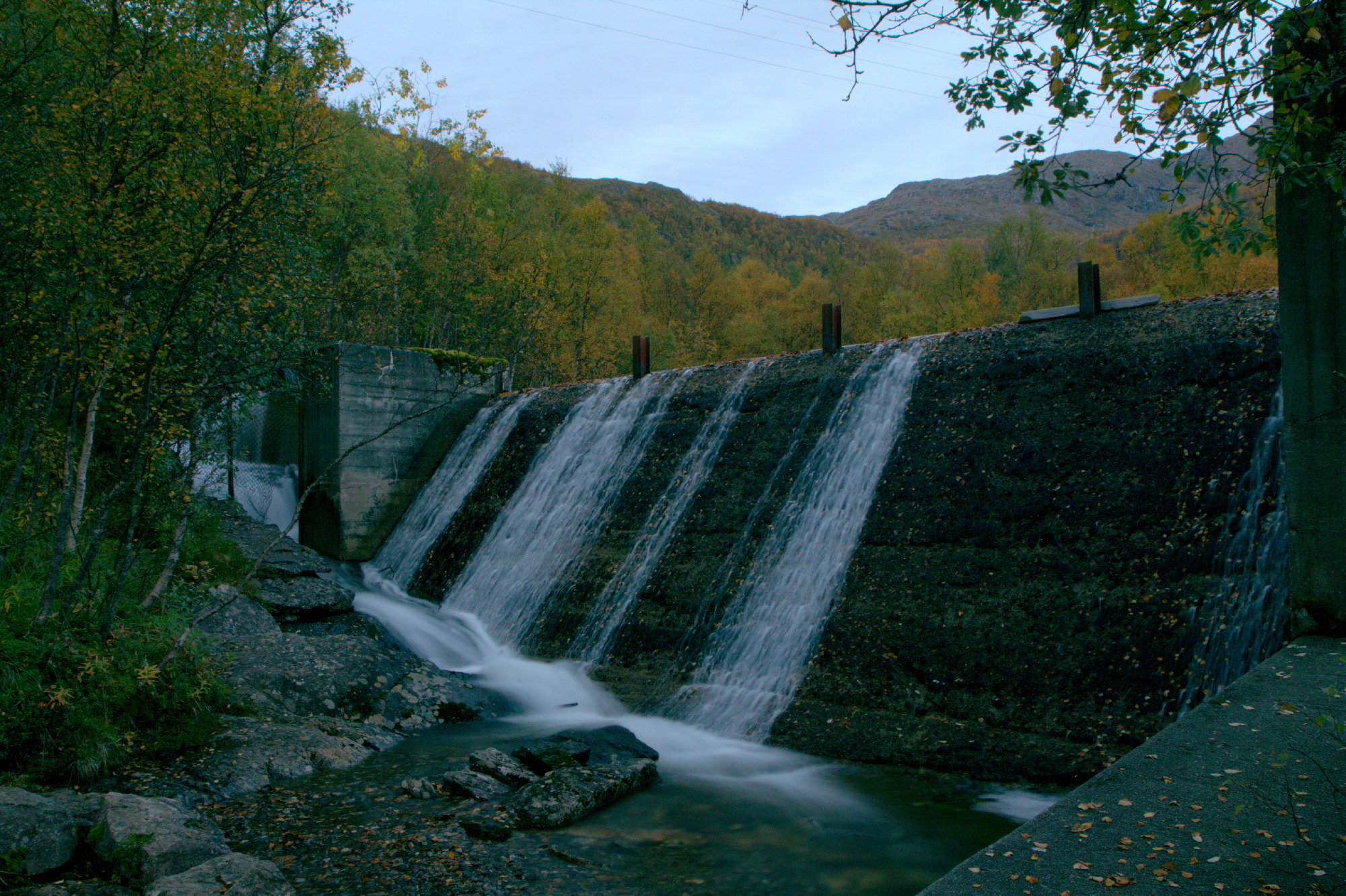
Surplus Water from the hydroelectric powerplant/municipal waterprocessing facility
Narvik and The Sleeping Queen
Narvik and a view of the mountain The Sleeping Queen (1.576 m. above sea level) in the background.

City of Narvik with the famous mountain The Sleeping Queen (1.576 m) in the background
Østervik River

The Østervik River - where my dad thought me to fish trout. Mind you, there are not big trout there - but it tastes great!

 ***
***
 PLEASE REMEMBER: Hit the reload button in your browser in order to see the latest predictions!!!






 Northern Blog-O-Sphere